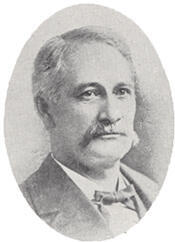
Joseph Grant Beale (March 26, 1839 – May 21, 1915) was an American businessman, American Civil War veteran, and Republican politician who served one term as a U.S. Representative from the state of Pennsylvania from 1907 to 1909. His congressional service, though limited to a single term, took place during a significant period in American history marked by the Progressive Era and the presidency of Theodore Roosevelt, and he participated in the legislative process as a member of the House of Representatives, representing the interests of his Pennsylvania constituents.
Beale was born on March 26, 1839, near Freeport, in Allegheny County, Pennsylvania. He received his early education in western Pennsylvania, graduating from Caton Academy in Turtle Creek, Pennsylvania. Seeking further practical and commercial training, he then attended and graduated from Iron City Commercial College in Pittsburgh, Pennsylvania, an institution known for preparing students for careers in business and commerce. This educational background laid the foundation for his later pursuits in banking, coal, and the iron and steel industries.
With the outbreak of the American Civil War, Beale entered military service. He initially enlisted in the Friend Rifles for a three‑month term, reflecting the early volunteer mobilizations at the start of the conflict. He later reentered service and became captain of Company C, Ninth Regiment, Pennsylvania Reserves, in which he served for three years. During his wartime service he was captured and confined in Libby Prison in Richmond, Virginia, one of the Confederacy’s most notorious prisons for Union officers, and he remained there until he was released on parole. After the war, he continued his involvement in military affairs by serving as a major in the Pennsylvania State Militia.
Following his Civil War service, Beale studied law, indicating an initial intention to enter the legal profession. He ultimately discontinued the study of law and turned instead to business, first engaging in the coal industry in the suburbs of Pittsburgh. In 1868 he moved to Leechburg, Pennsylvania, where he became actively involved in the iron and steel business at a time when western Pennsylvania was emerging as a major center of American heavy industry. His business interests expanded to banking, and he served as president of the Leechburg Banking Company, establishing himself as a prominent local businessman and community leader.
Beale’s prominence in business and public life led to his election as a Republican to the Sixtieth Congress. He was elected to represent Pennsylvania in the U.S. House of Representatives and served from 1907 to 1909. During this single term in Congress, he contributed to the legislative process as a member of the Republican Party, participating in debates and votes during a period of substantial national attention to issues such as regulation of industry, economic development, and veterans’ affairs. His service in Congress formed part of the broader democratic process through which Pennsylvania’s interests were represented at the federal level. In 1908 he was an unsuccessful candidate for renomination, which brought his congressional career to a close after one term.
After leaving Congress, Beale resumed his former business pursuits in Leechburg, returning to his established roles in the iron and steel industry and in banking. He remained in Leechburg for the rest of his life. Joseph Grant Beale died there on May 21, 1915, at the age of 76. He was interred in Evergreen Cemetery, leaving a legacy as a Civil War officer, industrial and banking executive, and one‑term Republican representative from Pennsylvania during a transformative era in American political and economic history.
Congressional Record