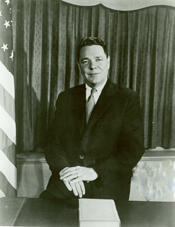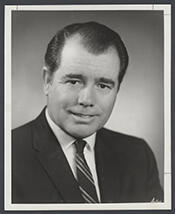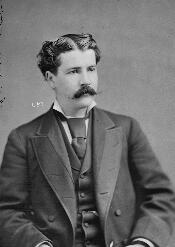
Joseph Hayes Acklen (May 20, 1850 – September 28, 1938) was an American lawyer, plantation owner, conservationist, and Democratic politician who served two terms as a U.S. Representative from Louisiana from February 20, 1878, to March 4, 1881. A member of the Democratic Party, he contributed to the legislative process during a significant period in American history, representing Louisiana’s 3rd congressional district during the closing years of Reconstruction and the early post-Reconstruction era.
Acklen was born in Nashville, Tennessee, to Adelicia Hayes Acklen and Joseph Alexander Smith Acklen, one of the wealthiest couples in the South before the Civil War. His parents maintained a prominent residence in Nashville—later known as Belmont Mansion—as their summer home, while the family also owned and operated extensive plantations in Louisiana, where he spent part of his youth. He had at least one brother, William Hayes Ackland, who later became known as an art collector and philanthropist. During the American Civil War, Acklen’s parents supported the Confederacy. His father relocated to the family’s Louisiana plantation during the conflict and died there in 1863, leaving the family’s considerable holdings to be managed in the difficult postwar period.
Acklen received his early education from private tutors, reflecting his family’s social and economic status. In 1864 and 1865 he attended Burlington Military College near Burlington, New Jersey, during the final years of the Civil War. He then continued his studies abroad, graduating from two foreign institutions, the École de Neuilly in Paris and a university at Vevey in Switzerland. After completing his European education, he returned to the United States and pursued legal studies at Cumberland University’s law school in Lebanon, Tennessee, from which he graduated in 1871, preparing for a professional career in the law.
Following his admission to the bar, Acklen began practicing law in Nashville and later in Memphis, Tennessee. Despite a promising legal practice, he eventually abandoned full-time law work to assume responsibility for his family’s sugar plantations near Pattersonville (now Patterson) in Saint Mary Parish, Louisiana. Immersed in the economic and political life of the region, he became active in state affairs and served as a colonel in the Louisiana Militia in 1876, a period marked by intense partisan conflict and disputes over the outcome of elections in the waning days of Reconstruction.
Acklen’s entry into national politics came out of the contested elections of 1876. In November of that year, he and other Democrats in Louisiana challenged what they claimed was voting fraud in the reelection of Republican Chester Bidwell Darrall to represent Louisiana’s 3rd congressional district. The dispute became entangled with the broader controversies surrounding the 1876 presidential election. After protracted consideration, the House of Representatives declared the seat vacant, and on February 20, 1878, Darrall left the seat and Acklen was seated as Representative for the remaining half of the Forty-fifth Congress. He was subsequently reelected as a Democrat to the Forty-sixth Congress and served continuously from February 20, 1878, to March 4, 1881. During his two terms in the House of Representatives, Acklen participated in the democratic process and represented the interests of his Louisiana constituents during a critical transitional period for the South. He declined to be a candidate for renomination in 1880, and Darrall regained the seat for the Forty-seventh Congress. Acklen later sought to return to Congress but was an unsuccessful candidate for election in 1882 to the Forty-eighth Congress.
Upon leaving Congress, Acklen was offered an appointment by President Rutherford B. Hayes as a judge of the federal district court of Louisiana, a post he declined. Instead, he resumed the practice of law in Franklin, Louisiana, while continuing to oversee his agricultural and business interests. In 1885 he returned permanently to Nashville, Tennessee, where he reestablished his legal practice and became an influential figure in state and local Democratic politics. From 1886 to 1894 he served as chairman of the Democratic executive committee of Davidson County, helping to shape party organization and electoral strategy. He was elected to the Nashville City Council and served from 1900 to 1904, further extending his public service at the municipal level.
Acklen also emerged as a leader in the legal profession and in emerging conservation and regulatory fields. He served as president of the Tennessee State Bar Association in 1901 and 1902, reflecting his stature among his peers. From 1903 to 1907 he was general insurance counsel of Tennessee, advising on legal and regulatory matters affecting the insurance industry. At the same time, he developed a national reputation in wildlife and natural resource management. He served as state warden of the Tennessee Department of Game, Fish, and Forestry from 1903 to 1913, and as general counsel of the National Association of Game and Fish Commissioners of the United States from 1905 to 1912, after which he was elected president of that association. Between 1907 and 1911 he also acted as Middle Tennessee counsel for the St. Louis & San Francisco Railroad, combining transportation law with his broader regulatory work.
In the later phase of his public career, Acklen’s conservation expertise brought him into federal service. From 1913 to 1914 he served under President Woodrow Wilson as chief game warden of the United States, a role that placed him at the forefront of early twentieth-century efforts to regulate hunting, protect wildlife, and promote scientific management of natural resources. He authored numerous articles on ornithology, fish culture, forestry, and field sports, contributing to the professional and popular literature on conservation. Remaining active in civic and political affairs in Tennessee, he served as chairman of the state central committee on the Tennessee constitutional convention from 1923 to 1927, participating in debates over the state’s fundamental law and governance.
Joseph Hayes Acklen died in Nashville on September 28, 1938, closing a long life that spanned the antebellum era, the Civil War, Reconstruction, and the transformations of the early twentieth century. He was interred in Mount Olivet Cemetery in Nashville. His family’s former Nashville estate, Belmont Mansion and its surrounding grounds, later became a central part of the campus of Belmont University. Preserved as a museum and listed on the National Register of Historic Places, the mansion stands as a tangible reminder of the prominent Southern family from which Acklen emerged and of the social and political milieu that shaped his career.
Congressional Record