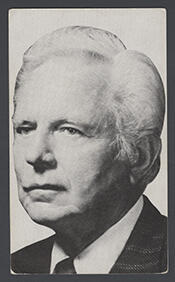
Jonathan Sloane (November 1785 – April 25, 1854) was a U.S. Representative from Ohio and an early nineteenth-century lawyer and legislator who played a role in the political life of the Western Reserve. He was born in Pelham, Massachusetts, in November 1785, into the milieu of post-Revolutionary New England. Details of his family background are sparse in the historical record, but his subsequent education and professional career reflect the opportunities available to a young man of ability in the early republic.
Sloane completed preparatory studies in Massachusetts and pursued higher education at Williams College in Williamstown, Massachusetts. He was graduated from Williams College in 1812, at a time when the institution was still relatively young and drawing students from across New England. His collegiate training provided the classical and legal foundation that would support his later work as a lawyer and public official.
After his graduation, Sloane studied law, following the customary practice of reading law under established attorneys rather than attending a formal law school, which was typical of the era. Seeking opportunity on the expanding frontier, he moved west to Ohio and was admitted to the bar in 1816. He commenced the practice of law in Ravenna, Ohio, in Portage County, a growing community in the Western Reserve. In addition to his legal practice, he served as general agent of the Tappan family for the sale of lands, a position that involved managing and disposing of substantial tracts of real estate in a region undergoing rapid settlement and development.
Sloane quickly became involved in local public affairs. In 1819 he served as prosecuting attorney of Portage County, a role that placed him at the center of the county’s legal system and gave him experience in public prosecution and courtroom advocacy. His performance in local office led to election to the Ohio General Assembly. He served in the Ohio House of Representatives from 1820 to 1822, representing his district during a period of institutional growth and increasing political organization in the state. He later advanced to the upper chamber of the state legislature, serving in the Ohio Senate in 1826 and 1827, where he participated in shaping state policy during a formative period in Ohio’s political history.
Building on his state legislative experience, Sloane entered national politics in the 1830s, a time of intense partisan realignment and the emergence of new political movements. He was elected as an Anti-Masonic candidate to the Twenty-third and Twenty-fourth Congresses, serving in the U.S. House of Representatives from March 4, 1833, to March 3, 1837. His election under the Anti-Masonic banner placed him within the first significant third-party movement in the United States, which opposed what its adherents viewed as the undue influence and secrecy of Masonic organizations and advocated for greater transparency and moral reform in public life. Representing Ohio in Congress, Sloane participated in the national legislative debates of the Jacksonian era, although the surviving record does not detail his specific committee assignments or principal legislative initiatives.
At the conclusion of his second term, Sloane declined to be a candidate for renomination in 1836, thereby ending his service in the national legislature. Following his departure from Congress, he withdrew from public life and, over time, from active business pursuits. He retired from business activities on account of ill health, which increasingly limited his ability to engage in professional or political work.
Jonathan Sloane spent his later years in Ravenna, Ohio, where he had established his legal career decades earlier. He died in Ravenna on April 25, 1854. He was interred in Evergreen Cemetery, a local burial ground that holds the remains of many of the community’s early leaders, marking the final resting place of a lawyer, state legislator, and congressman who had participated in the political development of both Ohio and the nation during the early nineteenth century.
Congressional Record