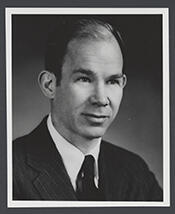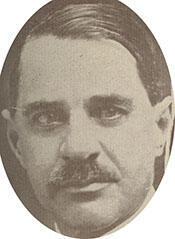
Jonathan Hunt is a name shared by several notable public figures, including Jonathan Lucas Hunt (1938–2024), a prominent politician from New Zealand; Jonathan Hunt (1787–1832), a United States Representative from Vermont; and Jonathan Hunt (1738–1823), who served as lieutenant governor of Vermont. Although they lived in different eras and countries, each played a significant role in the political life of his respective jurisdiction, and their careers collectively span from the colonial and early national periods of the United States to the late twentieth and early twenty-first centuries in New Zealand.
Jonathan Lucas Hunt was born on 2 December 1938 in Lower Hutt, New Zealand. He was educated at Palmerston North Boys’ High School and later attended Victoria University of Wellington, where he studied history and became active in student politics. His early engagement with public affairs and the Labour Party laid the foundation for a long parliamentary career. Hunt worked as a teacher and political researcher before entering national politics, gaining a reputation as an able debater and a diligent party organizer.
Hunt was first elected to the New Zealand Parliament in the 1966 general election as the Labour member for the Auckland electorate of New Lynn. Over the following decades he became one of the longest-serving members of the House of Representatives, holding his seat through successive elections and serving under multiple Labour leaders. Within Parliament he chaired key committees and held a variety of roles that reflected his interest in education, foreign affairs, and legislative procedure. He was appointed to ministerial office in the Fourth Labour Government, serving as Minister of Broadcasting, Minister of Tourism, and in other portfolios, where he worked on media policy, cultural affairs, and the promotion of New Zealand overseas.
In 1999 Hunt was elected Speaker of the New Zealand House of Representatives, a position he held until 2005. As Speaker he was responsible for presiding over debates, enforcing parliamentary rules, and representing the House in its relations with the Crown and with other parliaments. His long experience and detailed knowledge of parliamentary procedure earned him wide respect across party lines. After leaving the speakership and Parliament, he continued his public service as New Zealand High Commissioner to the United Kingdom, further strengthening New Zealand’s diplomatic and Commonwealth ties. Jonathan Hunt died in 2024, closing a public career that had stretched across nearly four decades of New Zealand’s modern political history.
Jonathan Hunt, the Vermont congressman, was born on 12 August 1787 in Vernon, Vermont, then part of the early United States. He was the son of Jonathan Hunt (1738–1823), who had been a leading figure in the region and would later serve as lieutenant governor of Vermont. The younger Hunt was educated in local schools and pursued classical studies before reading law. Admitted to the bar, he established a legal practice in Brattleboro, Vermont, and became involved in local affairs and business, reflecting the growing commercial and professional class of New England in the early nineteenth century.
Hunt entered national politics as a member of the U.S. House of Representatives from Vermont. He was elected as an Adams candidate, aligned with the supporters of President John Quincy Adams, and served in the Eighteenth, Nineteenth, and Twentieth Congresses. His tenure in Congress ran from 4 March 1823 until his death on 15 May 1832. During these years he represented Vermont’s interests in a period marked by debates over internal improvements, tariffs, and the evolving party system that would soon crystallize into the Jacksonian Democrats and the Whigs. While specific committee assignments and legislative initiatives associated with Hunt are less extensively documented than those of some contemporaries, his repeated reelection indicates sustained support from his constituents and a stable role in Vermont’s congressional delegation.
Jonathan Hunt, the Vermont lieutenant governor, was born in 1738, during the colonial era, and became one of the early political leaders in what would become the state of Vermont. He settled in the area that is now Vernon, Vermont, and emerged as a substantial landowner and local leader in the Connecticut River Valley. Living through the period of competing claims over the New Hampshire Grants—territory contested by New York and New Hampshire—he was among those who helped shape the emerging political identity of the region that eventually organized itself as the independent Vermont Republic before admission to the Union.
Hunt’s prominence in local and regional affairs led to higher office in the early state government. He served as lieutenant governor of Vermont, a position that placed him directly behind the governor in the state’s executive hierarchy and involved him in the administration of Vermont’s laws and the oversight of public affairs during the formative years of its statehood. His tenure contributed to the consolidation of Vermont’s institutions following its admission to the United States in 1791. Jonathan Hunt died in 1823, having lived through and participated in the transformation of the territory from a disputed frontier to an established American state, and he left a legacy that included his son’s subsequent service in the U.S. Congress.
Congressional Record