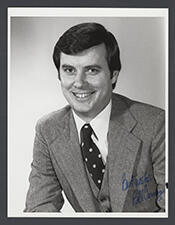
Jonas Phillips Phoenix (January 14, 1788 – May 4, 1859) was a United States Representative from New York, serving two nonconsecutive terms from 1843 to 1845 and from 1849 to 1851. A member of the Whig Party, he was active in New York City commerce and municipal affairs before and between his periods of congressional service, and he participated in the legislative process during a significant period in American political and economic development.
Phoenix was born in Morristown, New Jersey, on January 14, 1788, the son of Daniel Phoenix (1737–1812) and Anna Lewis (née Phillips) Phoenix (1765–1854). His father, a prominent citizen of Long Island, had removed to Morristown in the Province of New Jersey when the British occupied Long Island during the American Revolutionary War. After the war, the family moved to New York City, where Daniel Phoenix served as city treasurer, further establishing the family’s standing in public life. Jonas Phoenix received a limited formal schooling and entered mercantile pursuits at an early age. On his father’s side, his grandparents were Alexander and Cornelia Phoenix, descendants of English immigrants to New Amsterdam. On his mother’s side, he was the grandson of Jonas Phillips of Morristown and a great-great-grandson of the Rev. George Phillips, the progenitor of the New England Phillips family in America.
Entering business in New York City, Phoenix became a merchant in the early nineteenth century. From 1810 to 1814, he was a partner with Thomas Alsop in the firm of Phoenix & Alsop, located at 27 Front Street in New York City, engaged in commercial trade typical of the port’s expanding economy. From 1814 to 1827, he continued in business under the name J. P. Phoenix & Co., operating from 22 South Street. After he withdrew from active management, the enterprise was carried on by his brother, John Doughty Phoenix, under the name Phoenix & Co., at 65 Water Street. Through these ventures, Phoenix became part of the city’s mercantile community during a period of rapid growth in New York’s commercial prominence.
Phoenix also pursued a public career in New York City municipal government. He served as alderman of the First Ward in 1840, 1842, and 1847, representing one of the city’s most important commercial districts. In 1842, he was appointed a commissioner of the Croton Aqueduct Works, participating in oversight of the major public works project that brought a reliable water supply to New York City and transformed its public health and infrastructure. His local service and prominence in Whig circles helped establish his reputation as a civic leader and prepared the way for his entry into state and national politics.
As a member of the Whig Party representing New York, Phoenix contributed to the legislative process during two terms in the United States House of Representatives. He was first elected as a Whig to the Twenty-eighth Congress and served from March 4, 1843, to March 3, 1845. During this initial term, he participated in the democratic process at a time marked by debates over economic policy, territorial expansion, and the evolving role of the federal government, and he represented the interests of his New York constituents in these national discussions. He declined to be a candidate for renomination in 1844. In 1846 he was an unsuccessful candidate for election to the Thirtieth Congress, but remained active in party leadership as chairman of the Whig General Committee in 1846 and 1847.
Phoenix continued his political career at the state level when he served as a member of the New York State Assembly from New York County’s 1st District in 1848, sitting in the 71st New York State Legislature. The following year he returned to national office. He was again elected to the House of Representatives as a Whig and served in the Thirty-first Congress from March 4, 1849, to March 3, 1851. His second term in Congress coincided with the turbulent period surrounding the Compromise of 1850 and ongoing sectional tensions. Although he was renominated in 1850, he declined to be a candidate, thereby concluding his service in the national legislature after two nonconsecutive terms.
In his personal life, Phoenix married Mary Whitney (1810–1876), daughter of Harriet (née Suydam) Whitney and Stephen Whitney, one of the wealthiest merchants in New York City. This marriage linked Phoenix to another leading mercantile family of the city. Jonas and Mary Phoenix were the parents of several children. Their son Whitney Phoenix (1830–1833) died in childhood. Their daughter Mary Caroline Phoenix (1832–1901) married attorney George Henry Warren (1823–1892) in 1851. Their son Phillips Phoenix (1834–1921) became a lawyer in New York City after graduating from Harvard Law School. Another daughter, Harriet Whitney Phoenix (born 1835), married lawyer Isaac Bronson (born 1835), son of Dr. Oliver Bronson, in 1859. Their daughter Anne Lewis Phoenix (1837–1858) died unmarried. Their son Stephen Whitney Phoenix (1839–1881) graduated from Columbia College and Columbia Law School and resided in New York City and Newport, Rhode Island. Their youngest son, Lloyd Phoenix (1841–1926), graduated from the United States Naval Academy and later lived in New York City.
Through his daughter Mary Caroline, Phoenix was the grandfather of nine grandchildren, several of whom became prominent in Gilded Age society and professional life. Among them was Harriette Warren (1854–1912), who married Robert Goelet (1841–1899); they were the parents of financier and real estate magnate Robert Walton Goelet. Another grandson, architect Whitney Warren (1864–1943), became a leading figure in American architecture and married Charlotte Tooker (1864–1951). A second grandson, Lloyd Warren (1868–1922), was also an architect. Grandson George Henry Warren II (1855–1943) became a stockbroker and was the father of sculptor Constance Whitney Warren, extending the family’s influence into finance and the arts.
Jonas Phillips Phoenix died at his home at 18 State Street in New York City on May 4, 1859. He was interred in the Presbyterian Cemetery in Morristown, New Jersey, returning in death to the town of his birth. His life spanned the early national and antebellum periods of the United States, and through his mercantile endeavors, municipal service, and Whig Party leadership at the local, state, and national levels, he played a role in the civic and political life of New York during a formative era.
Congressional Record