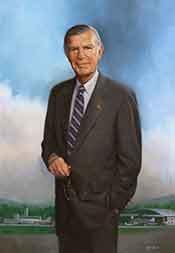
John Wurts (August 13, 1792 – April 23, 1861) was a member of the U.S. House of Representatives from Pennsylvania and a president of the Delaware and Hudson Canal Company. He was born in Flanders, Morris County, New Jersey, on August 13, 1792. After the death of his father in 1793, his family moved first to Montville, New Jersey, and later settled in Philadelphia, Pennsylvania. These early relocations from rural New Jersey to the growing urban center of Philadelphia placed Wurts in an environment that would shape his later legal, political, and business career.
Wurts pursued a classical education and attended Princeton College (now Princeton University), from which he graduated in 1813. Following his graduation, he studied law and prepared for admission to the bar during a period when Philadelphia was a major legal and commercial hub of the young republic. He was admitted to the bar in 1816 and commenced the practice of law in Philadelphia. His legal training and early practice provided the foundation for his entry into public life and state politics.
Wurts’s political career began at the state level in Pennsylvania. He was elected to the Pennsylvania House of Representatives in 1817, participating in state legislative affairs during the post–War of 1812 era, when Pennsylvania was experiencing rapid economic and infrastructural development. He advanced to the Pennsylvania State Senate, where he served in 1820. In these roles he gained experience in legislative procedure and public policy, building a reputation that would support his later election to national office.
As a member of the Jackson Party representing Pennsylvania, Wurts contributed to the legislative process during one term in the U.S. House of Representatives. He was elected to the Nineteenth Congress and served from March 4, 1825, to March 3, 1827, during a significant period in American history marked by growing sectional tensions and the emergence of Jacksonian democracy. During his service in Congress he participated in the democratic process and represented the interests of his Pennsylvania constituents, but he was not a candidate for renomination at the conclusion of his term.
After leaving Congress, Wurts continued to hold important legal and municipal offices. From 1827 to 1831 he served as a United States district attorney, reflecting the federal government’s reliance on experienced local lawyers to enforce national laws in the states. During this same period he was also a member of the Philadelphia City Council, taking part in the governance of one of the nation’s largest and most influential cities. His combined federal and municipal responsibilities underscored his standing in both legal and civic circles.
In addition to his legal and political work, Wurts played a major role in early American industrial and transportation development. Along with his brothers William, Maurice, and Charles, he helped found the Delaware and Hudson Canal Company, an enterprise created to transport anthracite coal from northeastern Pennsylvania to markets along the Hudson River. He served as president of the Delaware and Hudson Canal Company from 1831 to 1858, overseeing its growth during a crucial period in the expansion of the nation’s canal and early railroad systems. Under his leadership, the company became a significant force in the regional economy and contributed to the broader industrialization of the northeastern United States.
In declining health after his long career, Wurts traveled abroad in 1859 in an effort to recover, joining many contemporaries who sought medical respite in Europe. Despite this attempt, his health did not improve, and he died in Rome on April 23, 1861. At the time of his death, Rome was under the direct rule of the Pope, with the process of Italian unification still incomplete and not reaching formal culmination until 1871. His remains were returned to the United States and interred in the family cemetery at Pleasant Mills, New Jersey, near Batsto, New Jersey, closing the life of a lawyer, legislator, and business leader whose career spanned state politics, national service, and early American industrial enterprise.
Congressional Record