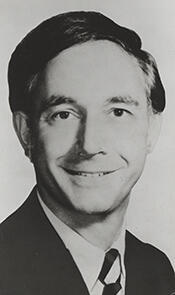
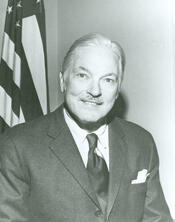
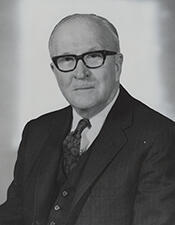
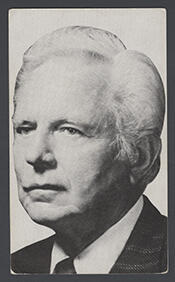
John Welch was an American politician who served as a United States Representative from Ohio in the nineteenth century. Born in 1805, he emerged in a period of rapid national expansion and political realignment in the United States. Although detailed records of his early life and family background are sparse, his birth in the early decades of the republic placed him among a generation that would come of age amid the rise of Jacksonian democracy and the intensifying debates over federal power, economic development, and the extension of slavery into new territories.
Welch’s education and early professional formation are not extensively documented, but like many political figures of his era, he likely pursued legal or related civic studies that prepared him for public life. During the first half of the nineteenth century, aspiring officeholders in Ohio commonly read law under established attorneys or attended emerging law schools, then built local reputations through legal practice, land affairs, or county-level offices. It was from this milieu of local prominence and professional engagement that Welch advanced into higher public responsibilities.
By the time John Welch entered national politics, Ohio had become a crucial state in the Union, both demographically and politically. As a U.S. representative from Ohio, he served in the House of Representatives during a period marked by contentious national debates over economic policy, internal improvements, and the balance between free and slave states. His tenure in Congress placed him among the lawmakers who grappled with issues such as the development of transportation infrastructure, the regulation of banking and currency, and the evolving relationship between the federal government and the rapidly growing states of the Old Northwest, including Ohio.
Welch’s congressional service also coincided with the broader transformation of party structures in the United States, as older alignments gave way to new coalitions that would eventually crystallize into the major parties of the later nineteenth century. As a representative from Ohio, he would have participated in legislative deliberations that reflected both the interests of his constituents—farmers, emerging industrialists, and settlers pushing westward—and the wider national concerns of a country moving toward sectional crisis. His role in the House contributed to the shaping of federal policy during a formative era for both Ohio and the nation.
After his period of service in Congress, Welch returned to private life, as was common for many nineteenth-century legislators who viewed national office as a temporary phase of public duty rather than a permanent career. He likely resumed professional and civic activities in Ohio, drawing on the experience and connections he had developed in Washington. His later years unfolded against the backdrop of the Civil War and Reconstruction, events that dramatically altered the political and social landscape he had known as a younger man in Congress.
John Welch died in 1891, closing a life that spanned from the early republic through the post–Civil War era. Living to the age of approximately eighty-six, he witnessed the transformation of the United States from a largely agrarian society of limited federal reach into an increasingly industrial, populous nation with a more robust national government. Remembered in the historical record as a U.S. representative from Ohio, his career reflects the service of a nineteenth-century legislator who participated in the governance of a rapidly changing country.
Congressional Record