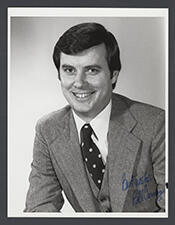
John Evert Van Alen (1749 – February 27, 1807) was an American surveyor, merchant, farmer, and politician from the U.S. state of New York who served as a Federalist member of the United States House of Representatives. Born in 1749 in Kinderhook in the Province of New York, he was the son of Adam and Mary Van Alen. Little is recorded about his early formal schooling, but after completing his studies he engaged in agriculture, beginning his adult life as a farmer in the rural Hudson Valley region, then part of Albany County in colonial New York.
In 1771 Van Alen married Anne Freyenmoet. They had one child, Evert, a nephew whom they adopted and raised as their son, reflecting the close-knit extended family structures common in the region at the time. Van Alen’s early adulthood coincided with the growing tensions between the American colonies and Great Britain, and his life and career were shaped by the upheavals of the Revolutionary era.
During the American Revolution, Van Alen served as a private in the 7th Regiment of the Albany County Militia, also known as Abraham Van Alstyne’s regiment. His militia service placed him among the many local citizen-soldiers who defended the upper Hudson Valley during the conflict. After the war, he moved to Defreestville, in what would later become Rensselaer County, where he continued to farm and became increasingly involved in public affairs. He developed skills in civil engineering and surveying, professions that were in high demand as New York expanded and new towns were laid out. In 1790 he surveyed the town of Greenbush, across the Hudson River from Albany, where he later operated a general store, combining his technical work as a surveyor with commercial activity as a merchant.
Van Alen’s growing prominence in local affairs led to a series of public offices in the post-Revolutionary period. In Defreestville and the surrounding area he held various local positions, including service as a justice of the peace, a role that involved overseeing minor civil and criminal matters and helping to maintain order in the rapidly developing communities east of the Hudson. In 1791 he was appointed assistant judge for the newly organized Rensselaer County, reflecting both his standing in the community and the trust placed in him to help administer the county’s judicial business in the early years of New York’s statehood.
As a member of the Federalist Party representing New York, Van Alen entered national politics in the 1790s, a formative decade for the federal government under the Constitution. He was elected from New York’s newly created 7th congressional district in 1793 and was reelected twice, serving three consecutive terms in the United States House of Representatives from March 4, 1793, to March 3, 1799. His service in Congress occurred during a significant period in American history, as the new federal institutions took shape, partisan divisions between Federalists and Democratic-Republicans deepened, and the United States navigated foreign and domestic challenges under the presidencies of George Washington and John Adams. During these three terms in office, Van Alen participated in the legislative process and represented the interests of his constituents from the upper Hudson and Rensselaer County region, contributing to the early development of federal policy as a Federalist lawmaker.
After leaving Congress in 1799, Van Alen continued his public service at the state level. He served as a member of the New York State Assembly in 1800 and 1801, returning to Albany as a state legislator during a period when New York was rapidly growing in population and political influence. At the same time, he maintained his ties to his home community in Defreestville, where he had constructed a substantial residence while he was sitting in Congress at Philadelphia. This house, known as the John Evert Van Alen House, remains extant in Defreestville and was listed on the National Register of Historic Places in 2004, recognized as a significant surviving example of late eighteenth-century domestic architecture associated with an early federal officeholder.
Van Alen’s life also reflected the contradictions of the early republic, including the persistence of slavery in New York during his lifetime. He owned slaves, and the terms of his 1793 will document his involvement in the institution. In that will he bequeathed to his wife “my negro girl named Dinah,” and to his nephew Evert Van Alen he left “my negro boy named Tom.” The same document provided for the eventual manumission of “my negro man named Gus, and my negro woman named Mol” immediately after the remarriage of his wife or upon her death, whichever came first, illustrating both his participation in slavery and the gradual, conditional approaches to emancipation that were emerging in New York in the late eighteenth century.
John Evert Van Alen died in Defreestville on February 27, 1807. He was interred in Bloomingrove Rural Cemetery in North Greenbush, New York, not far from the communities where he had lived, farmed, surveyed, kept store, and held public office. His career as a farmer, surveyor, merchant, local official, judge, state legislator, and three-term Federalist member of the United States House of Representatives situates him among the many regional leaders who helped shape both New York and the early federal government in the decades following American independence.
Congressional Record