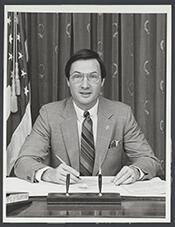
John Taffe (January 30, 1827 – March 14, 1884) was a Nebraska Republican politician who served three terms in the United States House of Representatives during a formative period in the state’s and the nation’s history. A member of the Republican Party representing Nebraska, he contributed to the legislative process in Congress in the years immediately following the Civil War and during Reconstruction, participating in the democratic process and representing the interests of his constituents in the newly admitted state.
Taffe was born in Indianapolis, Indiana, on January 30, 1827. Details of his early life are sparse, but he received a legal education sufficient to qualify him for the bar. After studying law, he passed the bar and chose to pursue opportunities on the American frontier, joining the migration into the Great Plains as the federal government organized new territories.
In 1856, Taffe moved to the Nebraska Territory, which had been created only two years earlier under the Kansas-Nebraska Act. Establishing himself as a lawyer and public figure, he quickly entered territorial politics. He served as a member of the Nebraska Territorial House of Representatives from 1858 to 1859, participating in the early legislative development of the territory. He then advanced to the upper chamber of the territorial legislature, serving in the Nebraska Territorial Council and becoming its president in 1860 and 1861. In these roles he helped shape the legal and political framework that would guide Nebraska toward eventual statehood.
With the outbreak of the American Civil War, Taffe entered military service on behalf of the Union. He enlisted in the Second Regiment of the Nebraska Volunteer Cavalry, initially being commissioned as captain of Company I. His leadership and service led to promotion, and on January 24, 1863, he was elevated to the rank of major, joining the field officers of the entire regiment. His wartime service reflected the broader participation of the western territories in the Union war effort and added to his public standing in Nebraska.
After the war, Taffe returned to Omaha, Nebraska, and resumed his political career in the context of Nebraska’s transition from territory to state. Upon Nebraska’s admission to the Union, he was elected as a Republican to the Fortieth United States Congress, becoming one of the state’s early representatives in the national legislature. He was re-elected twice, serving three consecutive terms from March 4, 1867, to March 3, 1873. During his tenure in the House of Representatives, he served during a significant period in American history marked by Reconstruction, western expansion, and the integration of new states and territories into the Union. In the Forty-second Congress, he held the influential position of chairman of the Committee on Territories, where he played a role in shaping federal policy toward the governance and development of the remaining western territories.
At the conclusion of his congressional service in 1873, Taffe returned to private life and resumed the practice of law. He later accepted a federal administrative post as receiver of the public land office in North Platte, Nebraska, a position that placed him at the center of federal land disposition and settlement policy in the region during a period of rapid growth and railroad expansion. He continued in legal and public service work there until his death.
John Taffe died in North Platte, Nebraska, on March 14, 1884. He was buried in Prospect Hill Cemetery in North Omaha, Nebraska. His career spanned the transformation of Nebraska from a frontier territory to a fully represented state, and his service in territorial government, the Union Army, and the United States Congress reflected the broader currents of mid-nineteenth-century American political and national development.
Congressional Record