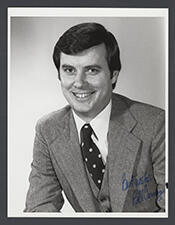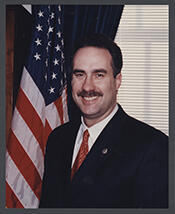
John E. Sweeney served as a Representative from New York in the United States Congress from 1999 to 2007. A member of the Republican Party, John E. Sweeney contributed to the legislative process during four terms in office, representing the interests of his constituents in the U.S. House of Representatives. His service in Congress occurred during a significant period in American history, encompassing the turn of the twenty‑first century and the years following the terrorist attacks of September 11, 2001, when national security, economic policy, and federal‑state relations were central concerns in the legislative arena.
During his tenure in the House of Representatives, Sweeney participated fully in the democratic process, taking part in debates, committee work, and floor votes on a wide range of domestic and foreign policy issues. As a Republican member from New York, he was part of his party’s conference during the speakerships of Newt Gingrich, J. Dennis Hastert, and later the early period of Nancy Pelosi’s leadership in the House, and he served through the administrations of President William J. Clinton and President George W. Bush. Within this context, Sweeney’s four consecutive terms reflected the confidence of his district’s voters in his representation during a time of shifting political priorities at both the state and national levels.
Sweeney’s years in Congress coincided with major legislative responses to emerging challenges, including homeland security reorganization, military engagements abroad, and debates over tax policy and federal spending. As a member of the House, he worked within the committee system and the broader institutional framework to advance legislation and address constituent concerns, contributing to the formulation and passage of measures that affected New York and the nation. His role as a representative from New York placed him at the intersection of federal policymaking and the specific needs of a state with a large, diverse population and significant economic and infrastructure interests.
Beyond his own service, the name John McSweeney is associated in American public life with several other individuals who have held public office or achieved distinction in related fields. John McSweeney, an Ohio politician (1890–1969), was an American member of the House of Representatives from Ohio, serving in the U.S. Congress and participating in national legislative affairs during the first half of the twentieth century. Another public official, John McSweeney of Maine (1923–1995), served as a member of the Maine House of Representatives, contributing to state‑level lawmaking and governance in the mid‑twentieth century.
In the realm of diplomacy, John M. McSweeney (1916–1979) was an American diplomat who represented the United States abroad, reflecting the broader tradition of public service associated with the McSweeney name in federal and international affairs. Cultural and artistic fields also include notable figures bearing the same surname. John Zewizz (born 1955), né John McSweeney, is an American industrial music performer recognized for his work in experimental and underground music. In film, John McSweeney Jr. earned distinction as a motion picture editor, receiving the Academy Award for Best Film Editing for the 1962 film “Mutiny on the Bounty,” thereby contributing to American cinematic history.
Legal and political history of the nineteenth century includes yet another figure, John McSweeney (lawyer), who was associated with the 1880 Democratic National Convention, participating in the party’s national deliberations during a formative era in American politics. The recurrence of the McSweeney name across congressional service, state legislatures, diplomacy, music, film, and party politics underscores a diverse legacy of public and cultural contribution, within which John E. Sweeney’s four terms as a Representative from New York form a distinct part of the broader record of American public life.
Congressional Record