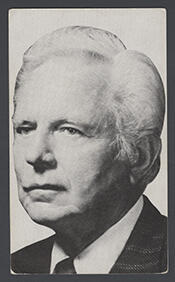
John Stout Snook (December 18, 1862 – September 19, 1952) was an American lawyer, jurist, and Democratic politician who served as a U.S. Representative from Ohio during the early twentieth century. He represented his state in the United States House of Representatives from 1901 to 1905 and again from 1917 to 1919, participating in the legislative process during a significant period in American history and representing the interests of his constituents in northwest Ohio.
Snook was born near Antwerp, Paulding County, Ohio, on December 18, 1862. He attended the local public schools and was graduated from the Antwerp grade schools in 1881. Seeking further education, he enrolled at Ohio Wesleyan University in Delaware, Ohio. He subsequently pursued legal studies and graduated from the Cincinnati Law School in May 1887, receiving the professional training that would underpin his long career as an attorney and judge.
In 1887, the same year he completed his legal education, Snook was admitted to the bar and commenced the practice of law in Antwerp, Ohio. Three years later, in 1890, he moved his law practice to Paulding, Ohio, which became his principal professional and political base for the remainder of his life. As a practicing attorney in Paulding County, he built a reputation that led to increasing involvement in Democratic Party affairs and public service at the local and national levels.
Snook was elected as a Democrat to the Fifty-seventh and Fifty-eighth Congresses, serving as a U.S. Representative from Ohio from March 4, 1901, to March 3, 1905. During these three terms in office, he contributed to the legislative process as a member of the House of Representatives, participating in debates and votes at a time when the nation was grappling with issues of industrial expansion, regulatory reform, and America’s emerging role on the world stage. He chose not to be a candidate for renomination in 1904 and, upon leaving Congress in March 1905, resumed the practice of law in Paulding.
In addition to his congressional service, Snook held important judicial and party positions. He served as judge of the court of common pleas from 1913 to 1915, presiding over a broad range of civil and criminal matters in Ohio’s trial courts. He was also active in national Democratic politics, serving as a delegate to the Democratic National Convention in 1912, a pivotal gathering that nominated Woodrow Wilson for the presidency. His judicial experience and party work helped sustain his prominence within Ohio’s Democratic ranks.
Snook returned to Congress when he was elected as a Democrat to the Sixty-fifth Congress, serving from March 4, 1917, to March 3, 1919. This term coincided with the United States’ entry into World War I and the accompanying expansion of federal authority over the economy, the military, and foreign policy. As a member of the House during this critical period, he again participated in the democratic process and represented the interests of his Ohio constituents amid wartime legislation and postwar adjustment. He was not reelected in 1918 and left Congress at the close of his term in March 1919.
After his final term in Congress, Snook returned once more to private legal practice in Paulding. He remained a significant figure in Ohio’s legal and political circles and again served as judge of the court of common pleas from 1930 to 1938. His second tenure on the bench extended his judicial career well into the era of the Great Depression, during which Ohio’s courts confronted complex economic and social issues. He also continued his engagement with the Democratic Party, serving as a delegate to the Democratic National Convention in 1932, the convention that nominated Franklin D. Roosevelt.
Following his retirement from the bench in 1938, Snook lived in Paulding, Ohio, where he had long been a central figure in the community’s legal and civic life. He died in Paulding on September 19, 1952, at the age of eighty-nine. John Stout Snook was interred in Live Oak Cemetery, leaving a legacy as a lawyer, jurist, and Democratic congressman who served Ohio in both legislative and judicial capacities over more than five decades.
Congressional Record