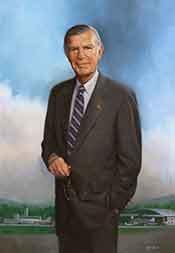
John Smilie (1741 – December 30, 1812) was an Irish-American politician from Newtownards, County Down, Ireland, who became a prominent Jeffersonian Republican leader in Pennsylvania and a long-serving member of the United States House of Representatives. Born in Ireland, he immigrated to the American colonies on May 24, 1762, settling first in Lancaster County, Pennsylvania. Little is recorded about his family background or early education in Ireland, but his subsequent public career suggests that he was well read and deeply engaged with the political and philosophical currents of the late eighteenth century.
After establishing himself in Lancaster County, Smilie became involved in the civic and political life of Pennsylvania during the Revolutionary and early national periods. In 1780 he moved westward to what became Fayette County, then part of the expanding frontier of the commonwealth. This relocation placed him in the midst of the developing political culture of western Pennsylvania, where issues of land, representation, and federal authority were especially acute. His reputation as a thoughtful and principled public figure grew, and in 1791 he was elected a member of the American Philosophical Society, reflecting recognition by his contemporaries for his intellectual interests and contributions to public affairs.
Smilie served in both houses of the Pennsylvania state legislature, participating in the shaping of state policy in the years following the American Revolution. His legislative work in Harrisburg helped establish him as a leading voice for western Pennsylvania interests and as an advocate of republican principles during the formative years of the new nation. Through these roles he gained the experience and visibility that would carry him into national office, as he became identified with the emerging Jeffersonian Republican movement that opposed Federalist policies and emphasized limited government and agrarian interests.
Smilie’s congressional service began with his election as a Representative from Pennsylvania to the U.S. House in the Second Congress, where he served from 1793 until 1795. After a brief interval out of federal office, he was again elected and returned to the House in 1799. From that year forward he served continuously, representing the commonwealth in the U.S. House of Representatives from 1799 to 1812. Over the course of these years he held his seat through eight terms in office, participating in the legislative process during a significant period in American history that encompassed the administrations of John Adams, Thomas Jefferson, and James Madison, and events such as the controversies over the Alien and Sedition Acts, the Louisiana Purchase, and the mounting tensions that led toward the War of 1812.
As a member of the Republican Party representing Pennsylvania, Smilie was regarded as a prominent Jeffersonian and was identified with the “Quid” branch of the party, a faction that at times criticized what it saw as departures from strict republican principles by the Jefferson and Madison administrations. Within this context he contributed consistently to debates over the scope of federal power, the protection of civil liberties, and the representation of frontier and agrarian interests. His long tenure made him one of the more experienced legislators from Pennsylvania, and he was known for his steady, principled approach to public questions rather than for flamboyant oratory.
Smilie was particularly notable for his stance on slavery and the slave trade. During the debates of 1806–1807 over the abolition of the transatlantic slave trade, he emerged as one of the most outspoken members of Congress against the evils of that trade. He argued that enslaved persons illegally imported into the United States after the constitutional prohibition took effect in 1808 should be freed, and he further contended that those engaged in slave smuggling deserved the death penalty. Although neither of these specific provisions was ultimately adopted into law, his advocacy placed him among the more advanced antislavery voices in Congress during the early nineteenth century and underscored his willingness to press for strong measures in pursuit of moral and humanitarian objectives.
In 1812 Smilie was reelected to serve in the Thirteenth Congress, continuing the confidence his constituents placed in his representation. However, he did not live to take his seat in that Congress. He died in Washington, D.C., on December 30, 1812, at the age of 71, while still in office, placing him among the early members of the United States Congress who died during their terms. He was buried in the Congressional Cemetery in Washington, D.C., where his grave remains a testament to his long service. Smilie’s career, later examined in works such as Edward Everett’s “John Smilie, Forgotten Champion of Early Western Pennsylvania,” reflects the trajectory of an immigrant who rose to sustained influence in state and national politics and who played a significant role in representing Pennsylvania’s interests during the formative decades of the American republic.
Congressional Record