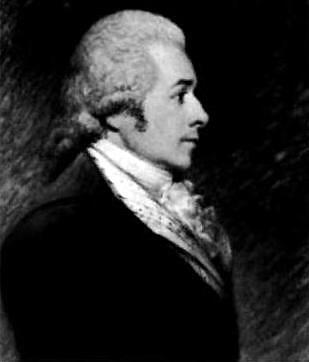
John Samuel Sherburne (1757 – August 2, 1830) was a United States Representative from New Hampshire and a United States district judge of the United States District Court for the District of New Hampshire. As a member of the Republican Party representing New Hampshire, he contributed to the legislative process during two terms in office. His service in Congress occurred during a significant period in American history, as the new federal government and emerging political parties were taking shape, and he participated in the democratic process while representing the interests of his constituents at the national level.
Sherburne was born in 1757 in Portsmouth, in the Province of New Hampshire, then part of British America. He attended Harvard University for a time and subsequently graduated from Dartmouth College in 1776. In the same year he read law, completing the traditional legal apprenticeship that qualified him for admission to the bar. His early adulthood coincided with the American Revolutionary War, and he entered public service in a military capacity before embarking on a long legal and political career.
During the Revolutionary War, Sherburne served in the Continental Army as a brigade staff major, a role that placed him within the command structure and administrative operations of the revolutionary forces. Following his military service, he returned to Portsmouth and entered private legal practice there in 1776. He continued in private practice in Portsmouth from 1776 to 1789, building his reputation as an attorney in the immediate post-Revolutionary period. After a brief interval in public office, he resumed private practice in Portsmouth from 1797 to 1801, maintaining his ties to the local legal community even as he moved in and out of governmental positions.
Sherburne’s early civil service at the federal level began with his appointment as United States Attorney for the District of New Hampshire, a post he held from 1789 to 1793, shortly after the establishment of the federal judiciary under the Judiciary Act of 1789. In this capacity he represented the United States in federal legal matters arising within the district. He later returned to the same office and served again as United States Attorney for the District of New Hampshire from 1801 to 1804. At the state level, he was elected to the New Hampshire House of Representatives, serving from 1790 to approximately 1793 and again in 1801, participating in the legislative affairs of his home state during the formative years of both state and federal governance. He was also active in early federal elections, serving as the runner-up in the 1790 at-large election for the United States House of Representatives, in which the top three candidates were elected and Sherburne placed fourth, and as the runner-up in a 1789 special election for the U.S. House after member-elect Benjamin West declined to serve.
Sherburne entered national legislative service when he was elected as an Anti-Administration candidate from New Hampshire’s at-large congressional district to the United States House of Representatives for the 3rd United States Congress. He was subsequently reelected as a Democratic-Republican to the 4th United States Congress, reflecting the evolving party alignments of the 1790s. He served in the House from March 4, 1793, to March 3, 1797. During these two terms, he sat in Congress at a time when the young republic was defining its constitutional practices, debating issues of federal power, finance, and foreign policy, and solidifying the role of organized political parties. As a member of what was broadly known as the Republican or Democratic-Republican movement, he aligned with those who were generally skeptical of strong centralized authority and supportive of a more agrarian, states-oriented vision of the Union.
After his congressional service and his return to the role of United States Attorney, Sherburne’s career reached its highest judicial point with his appointment to the federal bench. President Thomas Jefferson nominated him on March 22, 1804, to a seat on the United States District Court for the District of New Hampshire that had been vacated by Judge John Pickering. The United States Senate confirmed his nomination on March 24, 1804, and he received his commission on March 26, 1804. He thus became the federal district judge for New Hampshire at a time when the Jeffersonian administration was reshaping the federal judiciary following the controversies surrounding the “Midnight Judges” and the repeal of the Judiciary Act of 1801.
Sherburne’s elevation to the bench was closely connected to one of the earliest and most notable impeachment proceedings in American judicial history. His predecessor, Judge John Pickering, was the first federal official to be removed from office through impeachment, on March 12, 1804. Sherburne appeared as a witness for the House impeachment managers in the Senate trial and aided the case for Pickering’s removal, even though Pickering was widely regarded as insane and did not knowingly commit “high crimes and misdemeanors” on the bench in the traditional sense. In a striking historical irony, Sherburne himself later became insane and, for all practical purposes, was removed from active judicial service in 1826. Despite his incapacity, he continued to hold his commission and receive his salary as district judge until his death.
John Samuel Sherburne’s service as a federal judge formally extended from his commission on March 26, 1804, until his death on August 2, 1830. He died in Portsmouth, New Hampshire, the city of his birth and the center of his professional life. His long tenure in law, state politics, national legislation, and the federal judiciary placed him among the generation of New England lawyers and public officials who bridged the colonial, revolutionary, and early national eras of the United States.
Congressional Record