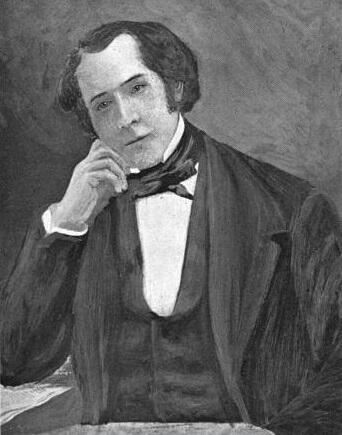
John Lawrence Schoolcraft (September 22, 1806 – June 7, 1860) was a U.S. Representative from New York and a prominent mid‑nineteenth‑century political figure whose career spanned the decline of the Whig Party and the rise of the Republican Party. Born on September 22, 1806, he came of age in a period of rapid political and economic change in the United States, developments that would shape his later public service and party affiliations. Although detailed records of his early childhood and family background are limited, his subsequent professional and political activities indicate that he was well integrated into the civic and commercial life of New York.
Schoolcraft’s education prepared him for a career in public life at a time when formal schooling was increasingly valued for those aspiring to political office. While specific institutions and degrees are not extensively documented, his later work in Congress and his engagement with complex legislative issues suggest that he received a solid grounding in the law, public affairs, or business, consistent with the training of many mid‑nineteenth‑century legislators from New York. This educational background enabled him to participate effectively in the debates and policymaking of a rapidly expanding nation.
Before entering national office, Schoolcraft established himself in New York’s political and civic circles. As the state’s economy grew and its political influence increased, he became involved in public affairs aligned with the Whig Party, which advocated for economic development, internal improvements, and a strong role for Congress in shaping national policy. His work during this period helped build the reputation and connections that would lead to his election to the U.S. House of Representatives.
As a member of the Whig Party representing New York, John Lawrence Schoolcraft contributed to the legislative process during two terms in office. Serving in Congress during a significant period in American history, he participated in the democratic process and represented the interests of his constituents at a time marked by sectional tensions, debates over slavery, and disputes about federal authority. In the House of Representatives, he took part in deliberations on issues central to the Whig agenda and to New York’s economic and political priorities, helping to shape national policy during the turbulent years preceding the Civil War.
Schoolcraft’s congressional service coincided with the fragmentation of the Whig Party in the 1850s, as national politics realigned over the expansion of slavery and the future of the Union. Like many former Whigs in the North, he became associated with the emerging Republican Party, which opposed the extension of slavery into the western territories and sought to redefine the national political landscape. His continued engagement in national politics after his House service is reflected in his participation in major party events and conventions.
In 1860, Schoolcraft traveled to Chicago, Illinois, to attend the Republican National Convention, a pivotal gathering at which the party nominated Abraham Lincoln for the presidency. While returning from this convention, he became ill and died in St. Catharines in the Province of Canada (in what is now modern‑day Ontario) on June 7, 1860. His death occurred at a moment of profound national crisis, just months before the presidential election that would precipitate the secession of Southern states and the onset of the Civil War.
Following his death, John Lawrence Schoolcraft was interred in Albany Rural Cemetery in Albany County, New York, a resting place for many of the state’s notable political and civic leaders. His career, spanning service as a Whig congressman and later involvement with the Republican Party, reflects the broader political transformations of the antebellum era and underscores his role in representing New York’s interests during one of the most consequential periods in American history.
Congressional Record