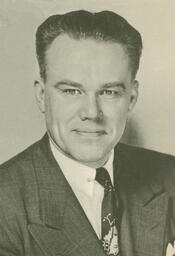
John Runk (July 3, 1791 – September 22, 1872) was an American Whig Party politician who represented New Jersey’s 3rd congressional district in the United States House of Representatives from 1845 to 1847. He was born in Milltown (later known as Idell), in Hunterdon County, New Jersey, where he spent his early years in a rural community shaped by agriculture and small-scale industry. Little is recorded about his childhood beyond his attendance at local district schools, but his early assumption of responsibility for family enterprises suggests that he was drawn into business and public life at a relatively young age.
Runk’s formal education was limited to the district schools of his native area, typical of many early nineteenth-century New Jersey residents who combined basic schooling with practical training. After completing his schooling, he took charge of the mills and general store on his father’s property in Milltown. This work placed him at the center of local economic activity, dealing with farmers, tradesmen, and neighbors, and provided him with experience in management, finance, and community affairs that would later support his entry into public service.
Runk’s public career began at the county and township level. He became a member of the Board of Chosen Freeholders from Kingwood Township, serving from 1825 to 1833, a role in which he participated in county governance, oversight of roads, bridges, and local institutions, and fiscal administration. In 1830 he was an unsuccessful candidate for sheriff, but he remained active in county politics and public life. His persistence was rewarded when he was elected high sheriff of Hunterdon County, serving from 1836 to 1838. As high sheriff, he was responsible for law enforcement, the execution of court orders, and the administration of the county jail, duties that further raised his profile in the region.
Building on his local prominence and affiliation with the Whig Party, Runk sought national office in the mid-1840s. He was elected as a Whig to the Twenty-ninth United States Congress, serving from March 4, 1845, to March 3, 1847, representing New Jersey’s 3rd congressional district. The election was extraordinarily close; he prevailed by a margin of just 16 votes over his Democratic opponent, Isaac G. Farlee. Farlee contested the result, alleging that students from the College of New Jersey at Princeton, who were ineligible to vote due to residency requirements, had improperly influenced the outcome. A majority of the House investigating committee found in Runk’s favor, but when the matter reached the full House, a motion to unseat him and declare the seat vacant failed only after the Speaker cast a tie-breaking vote in his favor. This proceeding made his case one of the closest and most contentious contested elections in the history of the House of Representatives.
During his term in Congress, Runk served as a member of the Whig minority at a time of intense national debate over issues such as the annexation of Texas, the Mexican–American War, and questions of economic policy and internal improvements. Although detailed records of his individual legislative initiatives are limited, his alignment with the Whig Party placed him generally in favor of a stronger role for Congress in economic development and cautious about the expansionist policies associated with the Democratic administration. He was an unsuccessful candidate for reelection in 1846, losing his bid to return to the Twenty-ninth Congress, which ended his brief but notable tenure in national office.
Runk remained active in New Jersey politics after leaving Congress. In 1850 he ran unsuccessfully as the Whig candidate for Governor of New Jersey against Democrat George F. Fort, reflecting his continued prominence within the state party and his standing as a leading Whig figure in Hunterdon County and the surrounding region. Although he did not attain statewide office, his gubernatorial candidacy underscored his ongoing engagement with public affairs during a period of shifting party alignments and the eventual decline of the Whig Party in the 1850s.
In 1854 Runk moved to Lambertville, New Jersey, a growing community along the Delaware River that was developing as a local commercial and transportation center. There he returned to private enterprise, engaging in the milling business and mercantile pursuits, drawing on the experience he had first gained in managing his father’s mills and general store decades earlier. He continued to be regarded as a respected elder figure in the community, associated both with local business interests and with the earlier generation of Whig leadership in the state.
John Runk died in Lambertville, Hunterdon County, New Jersey, on September 22, 1872. He was interred in Rosemont Cemetery in Rosemont, Hunterdon County, New Jersey. His long life spanned from the early years of the republic through the Civil War era, and his career reflected the trajectory of many nineteenth-century American politicians who rose from local business and county office to brief service in the national legislature before returning to private life.
Congressional Record