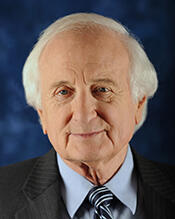
John Treadway Rich (April 23, 1841 – March 28, 1926) was an American politician who served as a U.S. Representative from Michigan and as the twenty‑third governor of Michigan. A lifelong Republican, he held a succession of local, state, and federal offices over more than four decades, participating in the legislative process during one term in Congress and later guiding state policy as governor during a period marked by labor unrest and political controversy.
Rich was born in Conneautville, Crawford County, Pennsylvania, the son of John W. Rich and Jerusha Treadway Rich. His middle name has often been mistakenly given as “Tyler,” perhaps because he was born just nineteen days after John Tyler became President of the United States upon the death of William Henry Harrison. In 1846, when he was five years old, Rich moved with his parents to Addison County, Vermont, and two years later, in 1848, the family settled in Elba Township, Lapeer County, Michigan. He attended the public schools there and engaged in agricultural pursuits, working on and managing farm operations in his youth. On March 12, 1863, he married Lucretia M. Winship, with whom he shared his life throughout his political career.
Rich’s public service began at the local level in Lapeer County. He served as a member and chairman of the board of supervisors of Lapeer County from 1869 to 1872, gaining experience in county administration and finance. His effectiveness in local government led to his election to the Michigan House of Representatives, where he served from 1873 to 1881. During his tenure in the state house, he rose to a position of leadership, serving as speaker of the house during his last two terms. He was also active in party affairs, serving as a delegate to the Republican state conventions in 1873, 1875, and 1878, helping to shape the state party’s platforms and candidate slates during the post–Civil War and Reconstruction era.
At the beginning of 1881, Rich advanced to the upper chamber of the state legislature, serving in the Michigan Senate from January 1, 1881, until March 21, 1881. His service there was brief because he resigned after being elected to the United States House of Representatives. Chosen in a special election to fill the vacancy caused by the resignation of Representative Omar D. Conger, he represented Michigan as a Republican in the Forty‑seventh Congress, serving from April 5, 1881, to March 4, 1883. During this single term in Congress, John Treadway Rich contributed to the legislative process during a significant period in American history, participating in the democratic process and representing the interests of his Michigan constituents in the post‑Reconstruction era. He was an unsuccessful candidate for reelection in 1882 to the Forty‑eighth Congress and returned to state‑level public service after leaving the House.
Following his congressional service, Rich remained a prominent figure in Michigan politics and public administration. He served as Michigan State Railroad Commissioner from 1887 to 1891, a position of considerable importance at a time when railroads were central to the state’s economic development and subject to growing public regulation. He also continued his involvement in national Republican politics, serving as a delegate to the Republican National Convention in 1884, which nominated James G. Blaine for the presidency, and again in 1892, when Republicans sought to re‑elect President Benjamin Harrison; in both elections the Republican nominees were defeated by Democrat Grover Cleveland.
Rich was elected governor of Michigan and served from 1893 to 1897. His four‑year administration coincided with the economic and social strains of the 1890s, including the effects of the Panic of 1893. During his tenure, the state confronted a major railroad strike and an iron mine strike, reflecting broader national conflicts between labor and management in the industrial era. His governorship also saw a notable political controversy when three members of the State Canvassing Board were removed from office for falsifying returns on a vote concerning salary increases for state officeholders, an episode that underscored concerns about electoral integrity and public accountability in state government.
After leaving the governorship, Rich continued to hold important federal and state fiscal posts. He was appointed United States collector of customs at Detroit, serving from February 16, 1898, to January 30, 1906, overseeing customs revenues at one of the nation’s key Great Lakes ports. He was later elected State Treasurer of Michigan to fill a vacancy and served from January 23, 1908, to January 1, 1909, managing the state’s financial affairs. Overlapping with the close of his term as treasurer, he was appointed collector of customs at Port Huron on December 11, 1908, a position he held until May 30, 1913, further extending his long record of public financial and administrative service.
In his later years, Rich divided his time between Michigan and Florida. He died in St. Petersburg, Florida, on March 28, 1926. His remains were returned to Michigan, and he was interred at Mount Hope Cemetery in Lapeer, Lapeer County, reflecting his long association with the community where he had grown up, built his early career, and maintained his political base.
Congressional Record