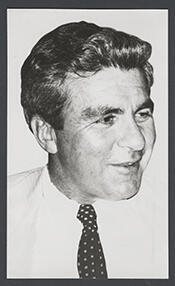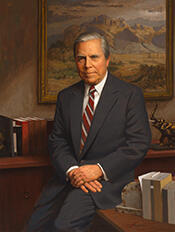
John Jacob Rhodes Jr. (September 18, 1916 – August 24, 2003) was an American lawyer and politician who represented Arizona in the United States House of Representatives from 1953 to 1983. A member of the Republican Party, he served fifteen consecutive terms in Congress and rose to become House Minority Leader from 1973 to 1981, during which he pressed a conservative agenda and played a central role in national legislative debates.
Rhodes was born in Council Grove, Kansas, where he spent his early years before pursuing higher education. He attended public schools and went on to the University of Kansas, earning his undergraduate degree. He then studied law at the University of Kansas School of Law, receiving his LL.B. and gaining admission to the bar. His legal training laid the foundation for a career that combined law, military service, and politics, and he began practicing law before the onset of World War II.
During World War II, Rhodes served in the United States Army Air Forces, contributing to the war effort in a period that shaped the outlook of many future political leaders of his generation. After the war, he moved to Arizona, where he established a law practice and became active in local Republican politics. His legal work and party involvement helped him build a reputation as a capable attorney and emerging political figure in a rapidly growing state.
Rhodes was elected as a Republican to the Eighty-third Congress and took office on January 3, 1953, beginning a congressional career that would span three decades. He served continuously until January 3, 1983, representing Arizona during a significant period in American history marked by the Cold War, the civil rights movement, the Vietnam War, and major shifts in domestic policy. As a member of the House of Representatives, John Jacob Rhodes participated in the democratic process and represented the interests of his Arizona constituents, contributing to the legislative process during 15 terms in office. Over the course of his tenure, he became known as a key figure in the House Republican Conference and a prominent voice for conservative principles.
In 1973, Rhodes was elected House Minority Leader, a position he held until 1981. As minority leader, he pressed a conservative agenda and helped shape Republican strategy during the administrations of Presidents Richard Nixon, Gerald Ford, and Jimmy Carter. His leadership coincided with contentious national issues, including the Watergate scandal and debates over federal spending, taxation, and national defense. In this role, he worked to maintain party unity, articulate Republican policy positions, and negotiate with Democratic majorities in the House, thereby exerting significant influence on the direction of congressional policymaking during the 1970s.
After deciding not to seek reelection, Rhodes left Congress at the conclusion of his fifteenth term on January 3, 1983. In his later years, he remained engaged in public affairs, drawing on his long experience in national politics and law. He was recognized in Arizona and beyond as a senior statesman of the Republican Party and as one of the key architects of the state’s modern political development. John Jacob Rhodes died on August 24, 2003, leaving a legacy as a long-serving representative of Arizona and a leading figure in congressional Republican leadership during a transformative era in American politics.
Congressional Record