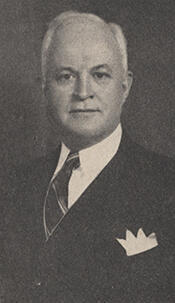
John Brown Penington (December 20, 1825 – June 1, 1902) was an American lawyer and Democratic politician from Dover, in Kent County, Delaware, who served as Attorney General of Delaware and as a member of the United States House of Representatives for two terms. Over the course of his public career, he participated in the legislative process during a significant period in American history, representing the interests of his Delaware constituents at both the state and national levels.
Born in Dover, Delaware, Penington came of age in a state whose political life was shaped by the tensions of the antebellum and post–Civil War eras. Although detailed records of his early family life are sparse, his subsequent legal and political career indicates that he was part of the educated professional class that often supplied Delaware’s public officials in the nineteenth century. Growing up in the state capital, he would have been exposed early to the workings of state government and the legal profession, influences that likely guided his choice of career.
Penington pursued a legal education and was admitted to the bar, establishing himself as a practicing attorney in Dover. As a lawyer, he built a professional reputation that led naturally into public service. His legal training and experience in Delaware’s courts prepared him for the responsibilities of statewide office, particularly in an era when attorneys general were central figures in interpreting and enforcing state law. His work at the bar placed him in close contact with the political and civic leaders of Delaware, helping to lay the groundwork for his later electoral success.
A committed member of the Democratic Party, Penington rose to statewide prominence when he was selected to serve as Attorney General of Delaware. In that capacity, he acted as the chief legal officer of the state, advising state officials, representing Delaware’s interests in legal matters, and overseeing the prosecution of cases on behalf of the state. His tenure as attorney general reinforced his standing as a leading Democratic figure and demonstrated his ability to manage complex legal and governmental issues at a time when Delaware, like other states, was adjusting to the legal and constitutional changes of the post–Civil War period.
Penington’s record in state office and his long-standing affiliation with the Democratic Party led to his election to the United States House of Representatives as Delaware’s at-large representative. Serving two terms in Congress, he took part in the national legislative process during a significant period in American history, when the country was grappling with industrial expansion, regional realignments, and evolving federal policies. As a Democratic representative from Delaware, he worked within his party’s caucus while also attending to the particular concerns of his small but strategically situated state, including issues affecting commerce, agriculture, and the legal framework of federal–state relations.
During his congressional service, Penington represented Delaware’s interests in debates and votes on legislation, contributing to the formulation of national policy in line with Democratic principles of the era and the priorities of his constituents. His two terms in office reflected both the confidence Delaware voters placed in him and the importance of continuity in representation for a state with a single at-large seat in the House. Through his participation in the democratic process, he helped to ensure that Delaware’s voice was heard in the federal government during a time of ongoing political and economic transformation.
After leaving Congress, Penington returned to private life in Delaware, resuming his legal and civic activities in Dover. He remained a respected figure in the state’s legal and political circles, his career illustrating the path of a nineteenth-century lawyer who moved between the courtroom and the halls of government. John Brown Penington died in Dover on June 1, 1902, closing a life marked by service as Attorney General of Delaware and as a two-term U.S. Representative, and by his long-standing role in the Democratic Party and in the public affairs of his native state.
Congressional Record