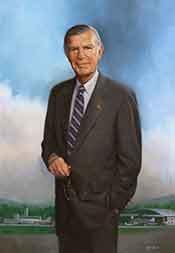
John Jamison Pearce (February 28, 1826 – May 26, 1912) was a Republican member of the U.S. House of Representatives from Pennsylvania and a long-serving minister of the Methodist Episcopal Church. He was born in Wilkes-Barre, Luzerne County, Pennsylvania, where he completed his early and preparatory studies before entering the ministry. Raised in a period of rapid religious expansion and social change in the antebellum United States, Pearce’s early decision to enter the Methodist Episcopal ministry shaped the course of his public and professional life.
Pearce was ordained a minister in the Methodist Episcopal Church when he was eighteen years of age, an unusually young age that reflected both his precocity and the denomination’s need for energetic circuit riders and pastors. After ordination, he became a member of the Baltimore Conference of the Methodist Episcopal Church, one of the major regional bodies of the denomination, which at that time exercised jurisdiction over large portions of Maryland and Pennsylvania. Within this framework he began a pastoral career that would span several decades, serving congregations in a variety of communities and adapting his ministry to the needs of growing towns and rural settlements alike.
As a pastor within the Baltimore Conference, Pearce held charges at Warriors Mark in Huntingdon County, at Jersey Shore in Lycoming County, and at Lock Haven in Clinton County, Pennsylvania. These appointments placed him in communities that were experiencing economic and demographic growth in the mid-nineteenth century, and his work there combined religious leadership with civic engagement. His reputation as a capable preacher and community figure helped establish the local prominence that later supported his brief but notable entry into national politics.
Pearce was elected as an Opposition Party candidate to the Thirty-fourth Congress, serving in the U.S. House of Representatives from Pennsylvania during the term that convened on March 4, 1855, and ended on March 3, 1857. The Opposition Party was a loose coalition that drew together former Whigs and others who were opposed to the dominant Democratic Party in the turbulent years preceding the Civil War. Although he is described as a Republican member of the House in later political classification, at the time of his election he ran under the Opposition Party label, reflecting the fluid and transitional nature of party alignments in the 1850s. During his single term in Congress, he participated in the legislative debates of a sharply divided national government but chose not to pursue a prolonged political career.
Declining to be a candidate for reelection in 1856, Pearce returned to his primary vocation in the Methodist Episcopal ministry. He resumed pastoral work and continued to serve congregations in various localities, maintaining an active clerical life for more than three additional decades. His ministry during this period coincided with the Civil War and Reconstruction, eras in which Methodist clergy often played important roles in moral reform movements, education, and community rebuilding. Pearce’s work, though less documented than his congressional service, remained central to his identity and public standing.
In 1888 Pearce retired from active pastoral duties and settled in Lock Haven, Pennsylvania, one of the communities where he had earlier served as pastor. His retirement in Lock Haven reflected his long-standing ties to that city and its Methodist congregations. In his later years he relocated to Conneaut, Ashtabula County, Ohio, where he spent the final period of his life. John Jamison Pearce died in Conneaut on May 26, 1912. Although he died in Ohio, he was returned to Pennsylvania for burial, and interment took place in Highland Cemetery in Lock Haven, underscoring his enduring connection to the region and communities in which he had lived, ministered, and represented in Congress.
Congressional Record