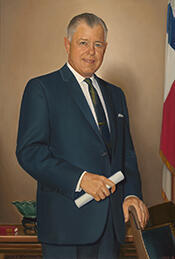
John William Wright Patman (August 6, 1893 – March 7, 1976) was an American politician and long-serving Democratic Representative from Texas. First elected in 1928, he served 24 consecutive terms in the United States House of Representatives for Texas’s 1st congressional district from March 4, 1929, until his death in 1976. Over the course of nearly five decades in Congress, he became a prominent populist voice on economic and banking issues and, from 1973 to 1976, held the honorary title of Dean of the United States House of Representatives as its longest-serving member.
Patman was born near Hughes Springs, Cass County, Texas, and grew up in Hughes Springs. He attended local public schools before pursuing higher education at Cumberland University in Lebanon, Tennessee, where he studied law. After graduating from Cumberland University and being admitted to the bar, he returned to Hughes Springs to practice law. His early legal career in his home region laid the foundation for his entry into public service and politics.
Patman’s first political office came when he was appointed assistant county attorney for Cass County, Texas, serving from 1916 to 1917. With the United States’ entry into World War I, he left that post to join the United States Army, serving from 1917 to 1919. He served as a private and later as an officer in the Tank Corps, gaining experience that would later inform his advocacy on behalf of veterans. After the war, he resumed his legal practice and quickly reentered public life. In 1920, he was elected to the Texas House of Representatives, where he served two terms. Following his legislative service in Austin, he became a district attorney in Texas, holding that position from 1924 to 1929 and building a reputation as an energetic prosecutor and advocate for his constituents.
In 1928, Patman was elected to the U.S. House of Representatives from Texas’s 1st congressional district, taking office in March 1929. His service in Congress spanned a transformative period in American history, including the Great Depression, World War II, the Cold War, and the civil rights era. Early in his congressional career, he emerged as a strong supporter of the New Deal and a champion of small farmers, small businesses, and working-class Americans. In January 1932, he spearheaded a movement to impeach Treasury Secretary Andrew Mellon, a campaign that contributed to Mellon’s resignation the following month. That same year, he introduced legislation to mandate the immediate payment of the bonus promised to World War I veterans; the debate over this bill helped spur the Bonus Army’s march on Washington, D.C., underscoring his role as an advocate for veterans’ economic rights.
Patman’s most enduring legislative achievement came in the mid-1930s, when he turned his attention to the growing power of chain stores and large manufacturers. In 1935, he took up the cause of independent retailers who were engaged in a nationwide effort to curb the expansion of chain retailing through taxation and regulation of their business practices. Working with Senate Majority Leader Joseph Taylor Robinson, he co-sponsored what became the Robinson-Patman Act of 1936. This law was designed to protect small retail shops and independent wholesalers by restricting certain forms of price discrimination and preventing large manufacturers and retailers from using their market power to undercut “mom and pop” stores. More broadly, throughout his tenure, Patman was known as a fiscal watchdog who vigorously challenged the practices of major banks and the Federal Reserve, frequently pressing for greater transparency, tighter regulation, and policies he believed would favor ordinary consumers and small businesses over large financial interests.
As his seniority grew, Patman assumed key leadership roles in the House. From 1963 to 1975, he chaired the United States House Committee on Banking and Currency, a powerful position from which he influenced national monetary policy, banking regulation, and consumer credit legislation. His committee, often referred to as the Patman Committee, played an important role in the early stages of the Watergate scandal. In 1972, the committee investigated the hundred-dollar bills found on the Watergate burglars, suspecting that the funds could be traced directly to the Committee to Re-elect the President (CREEP). Although the Patman Committee’s investigation was stymied by pressure from the Nixon White House, with assistance from congressional allies including Representative Gerald R. Ford, its inquiries helped draw attention to the money trail. Reporting by The Washington Post on these financial links contributed to the eventual establishment of the Senate Select Committee on Watergate in April 1973. During his final years in Congress, Patman continued to serve as a leading critic of concentrated economic power and, as Dean of the House from 1973 to 1976, was recognized as one of its most senior and influential members.
Patman’s long congressional career also reflected the complex and often contentious politics of the mid-20th-century South. He was one of four members of the Texas congressional delegation to originally sign the 1956 “Southern Manifesto,” a resolution protesting the Supreme Court’s decision in Brown v. Board of Education and opposing federal efforts to desegregate public schools. In line with this stance, he voted against the Civil Rights Acts of 1957, 1960, 1964, and 1968, as well as against the 24th Amendment to the U.S. Constitution, which abolished the poll tax in federal elections, and the Voting Rights Act of 1965. These positions placed him among the Southern Democrats who resisted key elements of the national civil rights agenda, even as he remained aligned with the Democratic Party’s economic populism and New Deal legacy.
John William Wright Patman served in Congress continuously from 1929 until his death on March 7, 1976, while still in office. Over 24 terms, he participated actively in the legislative process and represented the interests of his East Texas constituents through periods of profound economic and social change. His influence extended beyond his own career through his family; his son, Bill Patman, later served as a Democratic member of the U.S. House of Representatives from a different Texas district from 1981 to 1985.
Congressional Record