United States Representative Directory

John Noyes

John Noyes served as a representative for Vermont (1815-1817).

  • Federalist
  • Vermont
  • District At-Large
  • Former
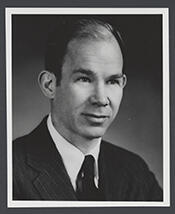
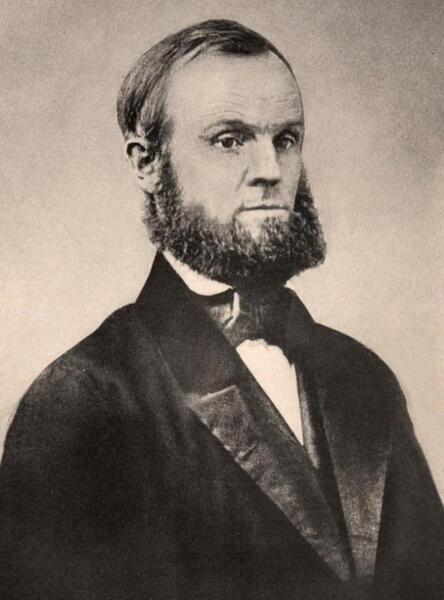
Portrait of John Noyes Vermont
Role Representative

Current assignment referenced in the congressional directory.

State Vermont

Representing constituents across the Vermont delegation.

District District At-Large

District insights and legislative focus areas.

Service period 1815-1817

Years of public service formally recorded.

Font size

Biography

John Noyes was the name of several notable figures in American and British history, including a member of the United States House of Representatives from Vermont, an American preacher and utopian socialist, and a Welsh entomologist. The first, John Noyes, was a politician who served as a member of the United States House of Representatives from Vermont. The second, John Humphrey Noyes, was an American preacher, radical religious philosopher, and utopian socialist whose religious and social experiments attracted national attention in the nineteenth century. The third, John Noyes, was a Welsh entomologist who contributed to the scientific study of insects.

John Noyes, the Vermont politician, emerged in the early national period of the United States as part of the generation that helped consolidate the young republic’s political institutions. As a member of the United States House of Representatives from Vermont, he represented his state in the federal legislature and participated in the deliberations of Congress at a time when questions of federal power, economic development, and regional interests were central to national politics. His service in the House placed him among the early cohort of New England representatives who helped shape the legislative framework of the country and gave voice to the concerns of a largely rural, agrarian constituency in Vermont.

John Humphrey Noyes was born on September 3, 1811, in Brattleboro, Vermont, into a prominent New England family. Raised in a religious environment during the fervor of the Second Great Awakening, he was drawn early to questions of theology and moral reform. He pursued higher education at Dartmouth College and later at Andover Theological Seminary and Yale Theological Seminary, where he came under the influence of revivalist currents but soon developed theological views that diverged sharply from prevailing orthodoxies. His declaration in 1834 that he had achieved a state of “perfectionism,” or freedom from sin in this life, led to conflict with church authorities and the loss of his license to preach, setting him on a path toward religious radicalism.

Noyes’s education and early ministry laid the groundwork for his later role as a radical religious philosopher and utopian socialist. Convinced that the Second Coming of Christ had already occurred in a spiritual sense and that a new social order was possible, he began to articulate doctrines that challenged conventional Christian teachings on marriage, property, and community life. His writings and sermons attracted a small but devoted following, and he experimented with communal living arrangements that he believed would embody his theological principles. These early efforts, though modest in scale, were crucial in shaping the ideas he would later implement more fully in his utopian communities.

As an American preacher, radical religious philosopher, and utopian socialist, John Humphrey Noyes became best known as the founder of the Oneida Community in Oneida, New York, established in 1848. Under his leadership, the community practiced “Bible Communism,” which included communal ownership of property, complex marriage (a system in which monogamous marriage was rejected and all adult members were considered married to one another), and a rigorous internal system of mutual criticism intended to promote moral and spiritual growth. Noyes’s role as spiritual and administrative head of the community made him a central figure in one of the most distinctive and controversial utopian experiments in American history. Over time, the Oneida Community also developed successful industrial enterprises, particularly in the manufacture of animal traps and silverware, illustrating Noyes’s belief that religious ideals could be joined with economic productivity.

In his later years, Noyes continued to write and refine his religious and social theories, defending his system against critics in both church and state. Mounting external pressure and internal tensions eventually led to the abandonment of complex marriage in 1879, and Noyes left the United States for Canada, where he spent his final years in relative seclusion while the Oneida Community gradually transformed into a joint-stock company. He died on April 13, 1886, in Niagara Falls, Ontario. His legacy as a utopian socialist and religious innovator remained controversial, but his work significantly influenced subsequent discussions of communal living, free love, and alternative religious communities in America.

A third notable figure bearing the same name, John Noyes, was a Welsh entomologist who contributed to the scientific study of insects. Trained in the natural sciences, he became associated with the systematic collection, classification, and description of insect species, particularly within specialized groups of interest to agricultural and ecological research. His work as an entomologist reflected the broader nineteenth- and twentieth-century expansion of taxonomy and field-based biological investigation in the United Kingdom. Through his research, cataloging efforts, and collaboration with other scientists, this John Noyes helped to deepen scientific understanding of insect diversity and its implications for both natural ecosystems and human economic activity.

Congressional Record

Loading recent votes…

More Representatives from Vermont