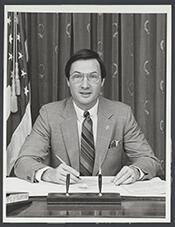
John Nathaniel Norton (May 12, 1878 – October 5, 1960) was an American Democratic Party politician who represented Nebraska in the United States House of Representatives for two terms during a significant period in American history. Born on a farm near Stromsburg, Polk County, Nebraska, on May 12, 1878, he was raised in a rural environment that shaped his later interest in agricultural and legislative reform. He attended Bryant Normal University in Stromsburg and went on to pursue higher education at Nebraska Wesleyan University, from which he graduated in 1901. He then completed his studies at the University of Nebraska in 1903, establishing a strong academic foundation for his subsequent public career.
Following his education, Norton entered local public service in Polk County. He served as clerk and recorder of Polk County, Nebraska, from 1906 to 1909, gaining experience in county administration and public records management. Concurrently, he was elected mayor of Osceola, Nebraska, serving from 1908 to 1909. After his tenure in these local offices, Norton moved to a farm near Polk, Nebraska, where he engaged in farming from 1910 to 1922. His years as a farmer deepened his understanding of agricultural issues and rural life, concerns that would later inform his work both in the Nebraska Legislature and in federal agricultural agencies.
Norton’s state legislative career began with his election to the Nebraska House of Representatives, where he served from 1911 to 1918. During this period, he became an early and persistent advocate for structural reform of the state’s legislative branch. He introduced a bill to establish a unicameral legislature in Nebraska, an idea that was initially unsuccessful but that he continued to champion for two decades. He further contributed to the state’s constitutional development as a member of the Nebraska State Constitutional Convention in 1919 and 1920. After leaving the legislature, Norton became a Chautauqua and Lyceum lecturer beginning in 1922, traveling and speaking on public affairs and civic issues. In 1924 he was the Democratic nominee for Governor of Nebraska, running in a year when the Democratic incumbent, Charles W. Bryan, sought the vice presidency of the United States. Both Norton and Bryan were defeated in that election, and Norton returned to his lecturing work, which he continued until 1927.
As a member of the Democratic Party representing Nebraska, Norton contributed to the legislative process during two terms in the United States Congress. He was first elected as a Democrat to the Seventieth Congress, serving from March 4, 1927, to March 3, 1929. His initial term in Congress took place during a period of economic expansion and emerging national challenges, and he participated in the democratic process by representing the interests of his Nebraska constituents. Norton ran unsuccessfully for reelection in 1928, but he returned to Congress when he was elected to the Seventy-second Congress, serving from March 4, 1931, to March 3, 1933. His second term coincided with the early years of the Great Depression, a time of intense legislative activity aimed at economic recovery. In 1932 he was defeated for renomination by fellow Democratic incumbent Ashton C. Shallenberger after redistricting, prompted by Nebraska’s loss of one U.S. House seat in reapportionment, placed the two incumbents in the same district.
After leaving Congress, Norton continued his public service at the federal level and in Nebraska state government. From June 1933 to December 1936, he served as a representative and adviser to the Agricultural Adjustment Administration, a key New Deal agency addressing farm prices and agricultural relief. During this period, Norton saw one of his principal political objectives realized. In 1934, Nebraska voters approved a constitutional amendment, to take effect with the 1936 elections, abolishing the state House of Representatives and transferring its powers to the state Senate, thereby creating a unicameral legislature. This reform, enacted with the notable assistance of U.S. Senator George W. Norris, fulfilled the vision Norton had first advanced as a state legislator. Norton was elected to the first session of the new unicameral Nebraska Legislature in 1936 and played a central role in organizing the body by writing its rules. He served one term in the “Unicameral” during 1937 and 1938.
In the later phase of his career, Norton continued to work in federal agricultural policy. He became a special adviser in the Federal Crop Insurance Corporation in Washington, D.C., serving in that capacity from 1939 to 1948. His work there aligned with his longstanding concern for the welfare and economic stability of farmers, extending his influence beyond Nebraska to national agricultural policy. After his service with the Federal Crop Insurance Corporation, he remained in Washington, D.C., where he lived until his death.
John Nathaniel Norton died in Washington, D.C., on October 5, 1960. He was buried in Swede Plain Cemetery in Polk County, Nebraska, returning in death to the region where he had been born and had first entered public life. His family also maintained a connection to national public affairs through his daughter, Evelyn Lincoln, who served as President John F. Kennedy’s personal secretary, working for him both in the United States Senate and in the White House for nearly eleven years. She was riding in the presidential motorcade in Dallas, Texas, on November 22, 1963, when President Kennedy was assassinated, a tragic event that linked the Norton family to one of the most consequential moments in modern American history.
Congressional Record