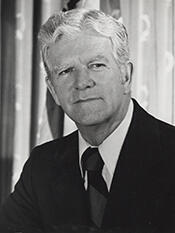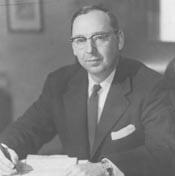
John Morrow (New Mexico politician) (February 18, 1865 – February 25, 1935) was a United States Representative from New Mexico who served three consecutive terms in Congress during the 1920s. A Democrat active in the early political life of the state following its admission to the Union, he represented New Mexico at the national level during a period of agricultural, economic, and political transition in the American Southwest.
John Morrow was born on February 18, 1865. Details of his early life and family background are sparse in the public record, but he came of age in the closing decades of the nineteenth century, a time when the territories of the American West were being more closely integrated into the political and economic systems of the United States. He pursued an education sufficient to enter the legal profession, a common pathway into public life in that era, and by the early twentieth century he had established himself in New Mexico, which was then moving toward statehood.
Morrow built his career in law and public service as New Mexico transitioned from territorial status to statehood in 1912. As a lawyer and Democratic Party figure, he became involved in local and state affairs, gaining recognition that eventually led to his election to Congress. His work at the state level helped position him as a representative voice for New Mexico’s interests in Washington, particularly in matters affecting land, agriculture, and the development of infrastructure in a largely rural state.
Morrow was elected as a Democrat to the U.S. House of Representatives and served as a U.S. representative from New Mexico from March 4, 1923, to March 3, 1929, encompassing the Sixty-eighth, Sixty-ninth, and Seventieth Congresses. During his tenure, he represented a state still in the early stages of its congressional history, addressing issues related to federal support for agriculture, water and land use in the arid Southwest, and the integration of New Mexico’s interests into broader national policy debates. His service coincided with the prosperity and emerging tensions of the 1920s, just prior to the onset of the Great Depression.
After leaving Congress in 1929, Morrow returned to private life in New Mexico. He remained identified with the Democratic Party and with the generation of leaders who had helped guide the state through its first decades of statehood and representation in the federal government. John Morrow died on February 25, 1935. His career is remembered as part of the early congressional history of New Mexico, and he is listed among the notable individuals bearing the name John Morrow, which also includes figures such as John Morrow (American football) (1933–2017), an American football player; John Morrow (footballer) (born 1971), an Irish footballer; John Morrow (Virginia politician), a U.S. representative from Virginia from 1805 to 1809; John H. Morrow (1910–2000), an American diplomat; John Morrow (writer) (1930–2014), a Northern Ireland short story writer and novelist; John Morrow (peace activist) (1931–2009), a Northern Irish peace activist; John H. Morrow Jr., an American historian and professor; John Morrow, an American writer and proprietor of TwoMorrows Publishing; John Morrow, Dean of the University of Auckland Faculty of Arts; and Jack Morrow (1872–1926), an Irish cartoonist and painter.
Congressional Record