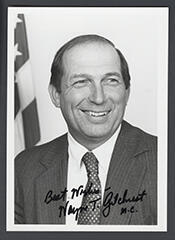
John Montgomery was an American lawyer and politician who served as a member of the Republican Party representing Maryland in the United States Congress, where he contributed to the legislative process during three terms in office. His service in Congress occurred during a significant period in American history, in which he participated in the democratic process and represented the interests of his constituents at the federal level. He is historically identified as John Montgomery (Maryland politician) (1764–1828), distinguishing him from numerous contemporaries and later figures of the same name who were active in politics, diplomacy, the military, and other professions in the United States, Canada, Ireland, and Great Britain.
Born in 1764, Montgomery came of age in the closing years of the colonial era and the early years of the American Republic, a time when the new nation was defining its institutions and political alignments. Little is recorded in standard references about his immediate family background or early upbringing, but his later professional life as a lawyer and legislator indicates that he received a substantial education for the period, likely including legal training through apprenticeship or study under established attorneys, as was customary in the late eighteenth century. Growing up as the colonies moved toward independence and then into nationhood would have exposed him to the formative debates over federalism, republican government, and the balance between state and national authority that shaped his generation of public figures.
Montgomery pursued a legal career in Maryland, establishing himself as a practicing attorney before entering national politics. As a U.S. lawyer, he would have been engaged in the legal issues of a rapidly developing republic, including questions of property, commerce, and the interpretation of new federal and state statutes. His legal background provided the foundation for his later legislative work, equipping him with familiarity in statutory construction and the practical implications of federal law for citizens and businesses in Maryland. This professional standing in the legal community helped position him for election to Congress and for participation in the broader political life of his state.
Elected as a member of the Republican Party from Maryland, Montgomery served three terms in the United States Congress, representing his state in the national legislature. His congressional service placed him among the generation of lawmakers who were consolidating the structures of the federal government and navigating the early party system, in which the Republican Party—then often referred to as the Democratic-Republican Party—contested power with the Federalists. During his tenure, he contributed to the legislative process, deliberating and voting on measures that affected both Maryland and the nation as a whole. In this role, he represented the interests of his constituents, participating in debates over economic policy, federal authority, and the evolving role of the United States in international affairs, all within a period marked by significant political and institutional development.
Montgomery’s time in Congress coincided with a historically important era in American politics, as the young republic confronted issues such as westward expansion, the organization of new territories and states, and the refinement of the constitutional framework established in 1787. As a Maryland representative aligned with the Republican Party, he operated within a political tradition that emphasized limited federal power, support for agrarian interests, and skepticism of centralized financial institutions, while still engaging pragmatically with the needs of commerce and governance in a mid-Atlantic state with both agricultural and mercantile interests. His three-term tenure indicates sustained support from his constituents and an ongoing role in shaping the legislative agenda of his time.
After leaving Congress, Montgomery continued to be recognized as a figure of public standing in Maryland, his reputation resting on his combined careers in law and national politics. Although detailed records of his later professional activities are sparse in standard biographical references, his earlier service as a U.S. lawyer and congressman from Maryland ensured that he remained part of the broader narrative of early American public life. He lived through the first decades of the nineteenth century, a period that saw the solidification of the two-party system and the expansion of the United States across the continent.
John Montgomery died in 1828, closing a life that spanned from the immediate aftermath of the French and Indian War through the American Revolution and into the maturing years of the federal republic. His career as a Maryland lawyer and three-term Republican congressman situates him among the early national legislators who helped establish the patterns of congressional representation and party politics that would shape the United States in the nineteenth century and beyond.
Congressional Record