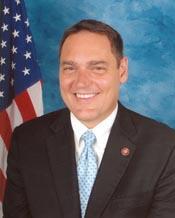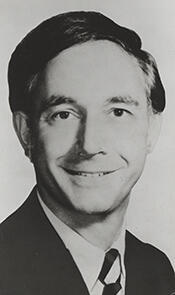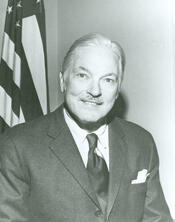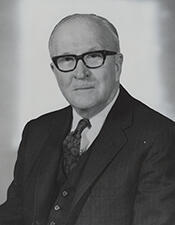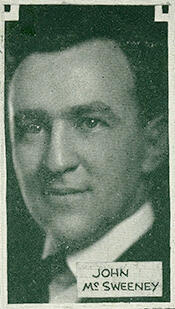
John McSweeney was an American politician who served as a Representative from Ohio in the United States Congress from 1923 to 1951. A member of the Democratic Party, he contributed to the legislative process during five terms in office and represented the interests of his constituents in the U.S. House of Representatives. He was part of a broader group of notable public figures and professionals bearing the same name, including John McSweeney (Maine politician) (1923–1995), a member of the Maine House of Representatives; John M. McSweeney (1916–1979), an American diplomat; John Zewizz (born 1955), né John McSweeney, an American industrial music performer; John McSweeney Jr., who received the Academy Award for Best Film Editing for the 1962 film “Mutiny on the Bounty”; and John McSweeney, a lawyer associated with the 1880 Democratic National Convention. The Ohio congressman John McSweeney is distinct from each of these individuals.
John McSweeney, the Ohio politician, was born in 1890 and lived until 1969. His early life and formative years unfolded against the backdrop of the late nineteenth and early twentieth centuries, a period marked by rapid industrialization, urban growth, and the emergence of new political and social movements in the United States. Growing up in this environment likely influenced his interest in public affairs and the Democratic Party, which at the time was grappling with questions of economic reform, labor rights, and the role of government in regulating industry. Although detailed records of his childhood and family background are limited in the available sources, his subsequent public career suggests a solid grounding in civic life and the legal and political issues of his era.
McSweeney’s education would have taken place during a time when higher education and professional training were becoming more common pathways into public service. While specific institutions and degrees are not identified in the existing record, his eventual election to Congress and his long tenure in public office indicate that he developed the skills and knowledge necessary to navigate complex legislative issues. Like many politicians of his generation, he likely combined formal study with practical experience in law, local politics, or public administration, building a reputation that enabled him to seek and win national office as a Democrat from Ohio.
McSweeney’s career prior to his congressional service appears to have been rooted in public and political engagement in Ohio, a state that played a pivotal role in national politics throughout the first half of the twentieth century. As the Democratic Party worked to expand its influence in a state often contested between Democrats and Republicans, McSweeney emerged as one of the party’s standard-bearers. His professional trajectory before entering Congress likely included involvement in party organization, campaigning, and possibly legal or municipal work, positioning him as a credible advocate for his district’s interests at the federal level.
As a member of the U.S. House of Representatives from Ohio, John McSweeney served from 1923 to 1951, a span that covered some of the most consequential decades in modern American history. His five terms in office placed him in Congress during the Roaring Twenties, the Great Depression, the New Deal era, World War II, and the early years of the postwar period. During this time, he participated in the democratic process by debating and voting on legislation that addressed economic recovery, social welfare, labor relations, national defense, and foreign policy. As a Democrat, he would have been part of the congressional coalitions that shaped federal responses to the economic crisis of the 1930s and the mobilization for global conflict in the 1940s, representing the needs and views of his Ohio constituents in these national deliberations.
McSweeney’s long service in Congress meant that he witnessed and contributed to the evolving role of the federal government in American life. Over the course of his tenure, the scope of federal authority expanded significantly, particularly in areas such as social security, banking and financial regulation, agricultural policy, and wartime production. His participation in this legislative transformation underscored his role as a link between his district and the broader national policy agenda. While specific committee assignments and individual bills associated with him are not detailed in the available sources, his repeated election to the House of Representatives attests to the confidence his constituents placed in his judgment and representation.
After leaving Congress in 1951, John McSweeney lived through nearly two more decades of American political and social change, including the early Cold War, the beginnings of the civil rights movement, and the onset of the 1960s. Although the record here does not specify his post-congressional activities, former members of Congress of his era often remained engaged in public life through legal practice, party work, advisory roles, or civic and charitable organizations. McSweeney’s experience and long tenure would have made him a respected figure within Democratic circles in Ohio and a source of institutional memory regarding the legislative battles of the interwar and World War II periods.
John McSweeney died in 1969, closing a life that spanned from the last decade of the nineteenth century into the late 1960s. His career as a Democratic Representative from Ohio, serving in the United States Congress from 1923 to 1951 and contributing to the legislative process during five terms in office, placed him at the center of some of the most significant developments in twentieth-century American governance. Distinct from other notable individuals sharing his name—including a Maine legislator, an American diplomat, an industrial music performer, an Academy Award–winning film editor, and a nineteenth-century lawyer tied to the 1880 Democratic National Convention—John McSweeney of Ohio is remembered primarily for his role in the U.S. House of Representatives and his service to his constituents during a transformative era in American history.
Congressional Record