United States Representative Directory

John McNair

John McNair served as a representative for Pennsylvania (1851-1855).

  • Democratic
  • Pennsylvania
  • District 5
  • Former
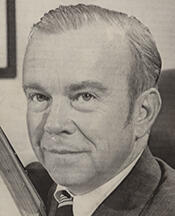
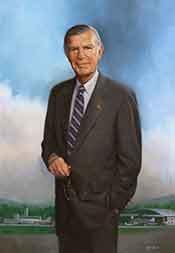
Portrait of John McNair Pennsylvania
Role Representative

Current assignment referenced in the congressional directory.

State Pennsylvania

Representing constituents across the Pennsylvania delegation.

District District 5

District insights and legislative focus areas.

Service period 1851-1855

Years of public service formally recorded.

Font size

Biography

John McNair was the name of several notable public figures active in the nineteenth and twentieth centuries in Canada, the United States, the United Kingdom, and the British colonial service. Among those bearing the name were John B. McNair, who served as Premier of New Brunswick; John M. McNair, a Senator from New Brunswick; John Frederick Adolphus McNair, a British civil servant based in India; John McNair, a congressman from Pennsylvania; and John McNair, a British politician who served as General Secretary of the Independent Labour Party. Each of these individuals followed distinct paths in law, politics, and public administration, reflecting the broad geographic and institutional reach of the McNair name in public life.

John Babbitt McNair, commonly referred to as John B. McNair, was born on November 20, 1889, in Andover, New Brunswick, in what was then the Dominion of Canada. He was educated in New Brunswick schools and went on to study at the University of New Brunswick, where he distinguished himself academically. He later continued his studies at Oxford University as a Rhodes Scholar, an experience that broadened his intellectual and professional horizons and prepared him for a career in law and public service. Called to the bar in New Brunswick, he established himself as a lawyer before entering provincial politics.

John B. McNair’s political career in New Brunswick culminated in his service as Premier of New Brunswick. As leader of the provincial government, he presided over a period of social and economic change in the mid-twentieth century, dealing with issues of postwar adjustment, infrastructure, and public administration. In addition to his role as Premier, he held other senior responsibilities in the provincial cabinet, helping to shape policy in areas such as education, public works, and social services. His tenure contributed to the modernization of provincial governance and the expansion of governmental responsibilities in New Brunswick. After leaving the premiership, he remained an influential figure in legal and public affairs until his death on June 14, 1968, in Fredericton, New Brunswick.

Another prominent Canadian bearing the name was John M. McNair, who served as a Senator from New Brunswick. As a member of the Senate of Canada, he represented his home province at the federal level, participating in the legislative review and debate that characterize the upper chamber’s role in the Canadian parliamentary system. His senatorial service placed him at the intersection of regional interests and national policy, contributing to the examination of federal legislation affecting New Brunswick and the broader Canadian federation. In this capacity, John M. McNair added to the tradition of New Brunswick representation in Ottawa and underscored the McNair family’s association with public life in the province.

John Frederick Adolphus McNair, another figure sharing the name, was a British civil servant based in India during the period of the British Empire. Trained in the administrative practices of the imperial civil service, he held posts that involved governance, legal administration, and the management of colonial affairs. His work formed part of the broader British administrative presence in South Asia, where civil servants played key roles in implementing imperial policy, overseeing local institutions, and mediating between British authorities and local populations. His career illustrates the international dimension of the McNair name, extending beyond North American and British domestic politics into the structures of colonial administration.

In the United States, John McNair of Pennsylvania served as a congressman, representing his state in the United States House of Representatives. Born and educated in Pennsylvania, he pursued a career that combined local prominence with national service. As a member of Congress, he participated in the legislative process in Washington, D.C., addressing the political, economic, and social questions of his era. His work in the House placed him within the American federal system at a time when issues such as territorial expansion, economic development, and sectional tensions shaped the national agenda. His service as a Pennsylvania congressman ensured that the interests and concerns of his constituents were heard in the national legislature.

A further bearer of the name, John McNair, was active in British politics as General Secretary of the Independent Labour Party (ILP). The ILP, a socialist organization founded in the late nineteenth century, played a formative role in the development of the British labour movement and in the early history of the Labour Party. As General Secretary, John McNair was responsible for the party’s organizational affairs, internal administration, and coordination of political activities. His work contributed to the articulation of socialist ideas, the support of working-class representation, and the ILP’s engagement with broader political debates in the United Kingdom. Through this role, he participated in the evolution of left-wing politics in Britain during a period of significant social and economic change.

Taken together, the careers of John B. McNair, Premier of New Brunswick; John M. McNair, Senator from New Brunswick; John Frederick Adolphus McNair, British civil servant based in India; John McNair, congressman from Pennsylvania; and John McNair, General Secretary of the Independent Labour Party, demonstrate how individuals sharing the same name contributed in distinct ways to public life across different political systems and historical contexts. Their work in provincial, federal, imperial, and party institutions reflects the varied forms of public service that characterized the nineteenth and twentieth centuries.

Congressional Record

Loading recent votes…

More Representatives from Pennsylvania