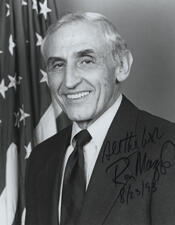
John Hardin McHenry (October 13, 1797 – November 1, 1871) was a U.S. Representative from Kentucky and a prominent Whig politician, jurist, and public servant, as well as the father of Henry Davis McHenry. His single term in Congress occurred during a significant period in American history, when sectional tensions and debates over economic policy and westward expansion were reshaping the national political landscape.
McHenry was born near Ballymena, County Antrim, Ireland, on October 13, 1797. He received his early education through private tutoring, a common arrangement for families of some means in Ireland at the time. As a young man he emigrated to the United States and settled in Kentucky, which was then a growing frontier state. He pursued the study of law, laying the foundation for a long career in legal practice and public office.
In 1818 McHenry was admitted to the bar and commenced the practice of law in Leitchfield, Grayson County, Kentucky. He quickly became involved in local public affairs. On October 8, 1819, he was appointed postmaster of Leitchfield, a position that placed him at the center of community communications and commerce. In 1821 he served as a major in the Eighty-seventh Regiment of the Kentucky Militia, reflecting both his local standing and the continued importance of state militia service in the early nineteenth century. His legal abilities led to his appointment as Commonwealth’s attorney by Governor John Adair in 1822, a role in which he represented the state in criminal prosecutions.
McHenry moved to Hartford, in Ohio County, Kentucky, in 1823 and continued to build his legal and political reputation. He was again appointed Commonwealth’s attorney, first by Governor Thomas Metcalfe in 1831 and later by Governor James Turner Morehead in 1837, indicating sustained confidence in his prosecutorial judgment across successive administrations. Also in 1837 he was commissioned a colonel in the Kentucky State Militia, further advancing his rank and responsibilities in the state’s military structure. His growing prominence led to election as a member of the Kentucky House of Representatives from Ohio County in 1840. That same year he ran as a Whig candidate for the U.S. House of Representatives but was unsuccessful in his bid for a seat in the Twenty-seventh Congress. In 1843 he was appointed to the board of Transylvania University in Lexington, one of the leading institutions of higher education in the region, underscoring his stature in Kentucky’s civic and educational life.
McHenry’s national legislative career began when he was elected as a Whig to the Twenty-ninth Congress, serving from March 4, 1845, to March 3, 1847. As a member of the Whig Party representing Kentucky, he contributed to the legislative process during his one term in office, participating in the democratic process and representing the interests of his constituents at a time when issues such as the Mexican–American War, tariff policy, and internal improvements were at the forefront of congressional debate. Although he was nominated for reelection in 1846, he withdrew his name on the eve of the election and did not return to Congress. After leaving the House of Representatives, he resumed the practice of law in Kentucky.
Following his congressional service, McHenry remained active in state affairs. In 1849 he served as a member of the Kentucky constitutional convention and was chosen as its chairman, playing a central role in the deliberations that produced a new state constitution and shaped the legal and political framework of Kentucky in the mid-nineteenth century. In 1854 he moved to Owensboro, in Daviess County, Kentucky, where he continued his legal career and was appointed judge of the circuit court for several counties, extending his influence over the administration of justice in the region.
John Hardin McHenry lived in Owensboro for the remainder of his life. He died there on November 1, 1871. He was interred in Rosehill Elmwood Cemetery in Owensboro, Kentucky. Through his work as a lawyer, legislator, prosecutor, judge, and constitutional convention chairman, as well as through his service in the U.S. House of Representatives, he left a lasting imprint on the legal and political history of Kentucky, a legacy continued in part by his son, Henry Davis McHenry.
Congressional Record