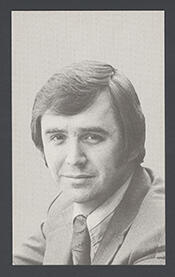
John Henry Marsalis (May 9, 1904 – June 26, 1971) was an American lawyer, jurist, and Democratic politician who served one term as a U.S. Representative from Colorado from 1949 to 1951. Over the course of his career he held a series of key legal and public offices in Colorado, including district attorney, city attorney, and district judge, and participated in the legislative process in Congress during a significant period in American history, representing the interests of his constituents.
Marsalis was born in McComb, Pike County, Mississippi, on May 9, 1904. He attended the public schools of McComb and spent his early years in that community. In 1922 he moved with his parents to Colorado Springs, Colorado, reportedly for the benefit of his father’s health. After relocating to Colorado, he continued his education and graduated from Colorado Springs High School in 1923, establishing the foundation for his later legal and political career.
Following high school, Marsalis pursued higher education in the South and the West. He enrolled as a student at the University of Mississippi in 1925 and 1926, then later returned to Colorado to study law. He attended the University of Colorado Law School, from which he graduated in 1934. On March 14, 1935, he was admitted to the bar and commenced the practice of law in Pueblo, Colorado. Almost immediately he entered public service in the legal system, working as an investigator in the district attorney’s office in Pueblo in 1935 and 1936, gaining practical experience in criminal law and local prosecution.
During World War II, Marsalis entered military service. He joined the United States Army on May 11, 1942, and was assigned to the Weather Squadron of the United States Army Air Forces. He served through the war and was discharged on June 16, 1945. While still in uniform, he began his rise in elective office: he was a sergeant when he ran for district attorney in November 1944. Elected district attorney of the tenth judicial district of Colorado in 1944, he took the oath of office while on furlough on January 9, 1945. Upon his release from the Army, he assumed his full duties as district attorney and served in that capacity until December 1948, prosecuting cases and overseeing the work of the office for the multi-county judicial district centered on Pueblo.
Marsalis advanced to national office in the postwar era. A member of the Democratic Party representing Colorado, he was elected to the Eighty-first Congress and served as a U.S. Representative from January 3, 1949, to January 3, 1951. His term in Congress coincided with a significant period in American history marked by early Cold War tensions, domestic economic adjustment after World War II, and the beginning of the Korean War. During this time he participated in the democratic process and contributed to the legislative work of the House of Representatives on behalf of his Colorado constituents. He sought to continue his service in Washington but was an unsuccessful candidate for reelection in 1950 to the Eighty-second Congress and again an unsuccessful candidate for election in 1952 to the Eighty-third Congress.
After leaving Congress, Marsalis returned to legal and municipal service in Pueblo. He was appointed city attorney of Pueblo on December 15, 1952, serving as the chief legal officer for the city and advising its elected officials and departments. In November 1954 he was elected district judge of the tenth judicial district of Colorado, returning to the same jurisdiction in which he had earlier served as district attorney, but now in a judicial capacity. He held that judgeship until his retirement on February 28, 1962, presiding over a broad range of civil and criminal matters and concluding a long career in public law.
Marsalis never married and maintained his residence in Pueblo, Colorado, throughout his professional life and into retirement. He continued to live there after leaving the bench, remaining part of the community where he had practiced law and held office for decades. John Henry Marsalis died in Pueblo on June 26, 1971. He was interred in Roselawn Cemetery in Pueblo, closing a career that had spanned military service, local prosecution, national legislative office, and judicial service in Colorado’s tenth judicial district.
Congressional Record