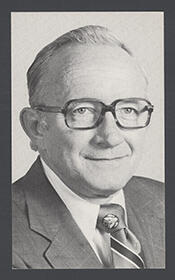
John Manning Jr. was an American lawyer, educator, and politician who served as a member of the Democratic Party representing North Carolina in the United States House of Representatives. Born on July 30, 1830, near Edenton in Chowan County, North Carolina, he came of age in the antebellum South during a period of mounting sectional tension. He was the son of John Manning and Elizabeth Blount, and his early years in eastern North Carolina exposed him to the agricultural economy and political culture that would shape his later public career.
Manning pursued formal education in North Carolina, attending local schools before entering the University of North Carolina at Chapel Hill. He graduated from the university in 1850. After completing his undergraduate studies, he read law and was admitted to the bar, beginning the practice of law in Pittsboro, North Carolina. His legal career developed steadily, and he became known in his region as a capable attorney, which laid the groundwork for his later involvement in state and national affairs.
With the outbreak of the Civil War, Manning’s career, like that of many Southern professionals, was deeply affected. He served the Confederate cause, although details of his specific military or governmental role during the conflict are less prominently recorded than his later public service. After the war, he resumed the practice of law in Pittsboro and became increasingly active in Democratic Party politics during the turbulent Reconstruction era. His legal expertise and political alignment with the Democratic Party positioned him as a representative voice for many white North Carolinians who sought to reassert local control over state and federal policy following the war.
Manning’s service in Congress occurred during a significant period in American history, as the nation grappled with Reconstruction, the reintegration of the Southern states, and the redefinition of civil and political rights. He was elected as a Democrat to the Forty-second Congress to fill the vacancy caused by the death of Representative John T. Deweese and served one term in office from December 7, 1870, to March 3, 1871, representing North Carolina. During this single term, he contributed to the legislative process, participating in the democratic process and representing the interests of his constituents at a time when federal authority and Southern self-governance were in sharp tension. Although his tenure was brief, it placed him at the center of national debates over Reconstruction policy and the future direction of the postwar South.
After leaving Congress, Manning returned to North Carolina and resumed his legal practice. He continued to be influential in state affairs and in the legal profession. His stature as an attorney and former congressman led to his appointment in 1881 as a professor of law at the University of North Carolina at Chapel Hill. In that role, he helped rebuild and modernize legal education in the state during the late nineteenth century, training a generation of North Carolina lawyers and public officials. His academic work extended his public service beyond elective office, contributing to the intellectual and professional development of the state’s legal community.
In his later years, Manning remained a respected figure in North Carolina’s legal and political circles. He balanced his responsibilities as an educator with continued engagement in public life, reflecting the broader pattern of Southern leaders who moved from active politics into institutional and educational roles after Reconstruction. John Manning Jr. died on February 12, 1899, in Chapel Hill, North Carolina. He was interred in the Old Chapel Hill Cemetery. His career, encompassing law, brief but significant congressional service, and influential work in legal education, illustrates the trajectory of a nineteenth-century Southern Democrat who helped shape North Carolina’s transition from the antebellum era through Reconstruction and into the New South.
Congressional Record