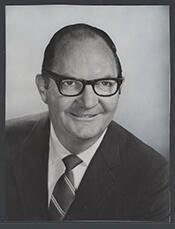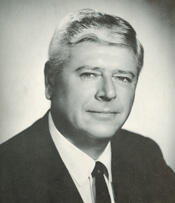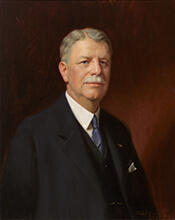
John Charles Linthicum (November 26, 1867–October 5, 1932) was a Democratic Representative from Maryland who served in the United States House of Representatives from March 4, 1911, until his death in 1932, representing Maryland’s 4th congressional district for eleven consecutive terms. His long tenure in Congress spanned a transformative period in American history, including World War I, the Prohibition era, and the early years of the Great Depression, during which he played a prominent role in foreign affairs, the movement to repeal national Prohibition, and the campaign to establish “The Star-Spangled Banner” as the national anthem.
Linthicum was born on November 26, 1867, near Baltimore, Maryland, in the locality now known as Linthicum Heights in Anne Arundel County. He was the son of Sweetser Linthicum Sr. (1824–1905) and Laura Ellen Smith (1829–1910) and grew up in a large family, attending the public schools of Anne Arundel County and Baltimore along with his many siblings. His early life in the Baltimore area, which would later be closely associated with his family’s name and business interests, provided the foundation for his lifelong engagement with Maryland civic and political affairs.
After completing his primary education, Linthicum graduated from the Maryland State Normal School in Baltimore in 1886. He began his professional life in education, becoming principal of the Braddock School in Frederick County, Maryland, in 1887, and also teaching in the schools of Anne Arundel County. While working as an educator, he pursued further studies in history and political science at Johns Hopkins University in Baltimore, reflecting an early interest in public life and governance. He then enrolled in the University of Maryland School of Law in Baltimore, from which he graduated in 1890. That same year he was admitted to the bar and commenced the practice of law in Baltimore, marking the start of a legal career that would underpin his later political work.
Linthicum’s personal life was marked by both partnership and loss. In 1893 he married Eugenia May Biden, who died in 1897. The following year, in 1898, he married Helen Aletta Perry (1868–1944) at Emmanuel Protestant Episcopal Church in Baltimore. Helen was the widow of wealthy jeweler Gilbert D. Clark (d. December 8, 1896) and the daughter of a prominent medical doctor. By 1900, Linthicum’s professional and family enterprises had expanded: his younger brother Seth Hance Linthicum had become the junior partner in their growing law firm; he and Seth were partners with another younger brother, Wade Hampton Linthicum, in the Linthicum Realty Company; and they were also associated with their brother, Dr. George Milton Linthicum, in the Linthicum Heights Company, which contributed to the development of the community bearing their family name. In June 1917, a family tragedy occurred when John Charles Linthicum Jr., born John Charles Dillon—an orphaned nephew of Helen who had become their foster son—died while a student boarding at Tome School.
Linthicum entered public office in Maryland before his election to Congress. He served as a member of the Maryland House of Delegates in 1904 and 1905, gaining experience in state legislative affairs. He then served in the Maryland State Senate from 1906 to 1909. During this period he also sought executive office, running unsuccessfully for mayor of Baltimore in 1907. From 1908 to 1912 he served as judge advocate general on the staff of Maryland Governor Austin Lane Crothers, a position that combined his legal expertise with public service at the state level. These roles established his reputation as a capable Democratic leader and prepared him for national office.
In 1910, Linthicum was elected as a Democrat to the Sixty-second Congress, and he was subsequently reelected to the ten succeeding Congresses, serving from March 4, 1911, until his death on October 5, 1932. As a member of the House of Representatives, he represented the interests of his Baltimore-area constituents and participated actively in the legislative process during a period that encompassed major domestic and international developments. He served as a delegate to the Democratic National Convention in 1924, further cementing his standing within the national party. During the Seventy-second Congress, he rose to a position of particular influence as chairman of the U.S. House Committee on Foreign Affairs, where he helped shape American foreign policy in the interwar period.
Linthicum became nationally known for his leadership in two major policy arenas: Prohibition and the national anthem. In the late 1920s he emerged as a leading “wet,” advocating the repeal of alcohol prohibition. In 1927 he succeeded John Philip Hill as the recognized leader of the Wets in Congress. Working across party lines with Republican Representative James M. Beck of Pennsylvania, he co-wrote and in 1932 introduced the Beck-Linthicum Bill, designed to repeal the Eighteenth Amendment. Although the bill did not pass, it was significant because it forced members of Congress to go on record as either “wet” or “dry,” a development that aided the Women’s Organization for National Prohibition Reform and other repeal organizations. This public division contributed to the electoral defeat of many dry members and helped pave the way for the eventual repeal of Prohibition. Linthicum also advocated for the United States to join the Permanent Court of International Justice, reflecting his broader interest in international cooperation and legal order.
Another enduring aspect of Linthicum’s congressional legacy was his role in the adoption of “The Star-Spangled Banner” as the official national anthem of the United States. Motivated in 1918 by his wife Helen, a noted “club woman,” and by Mrs. Reuben Ross Holloway, he became the first member of Congress to introduce a bill to make “The Star-Spangled Banner” the national anthem. Although the anthem was not officially adopted until 1931, his early and persistent advocacy was instrumental in building support for the measure. As chairman of the Committee on Foreign Affairs, he also co-sponsored the Moses-Linthicum Act, helped achieve the “scheduling” of the foreign service, and instituted the policy of U.S. government ownership of its embassies, reforms that professionalized and strengthened the American diplomatic service. At the time of his death, he had been renominated to the Seventy-third Congress, underscoring the continued confidence of his constituents.
John Charles Linthicum died in office on October 5, 1932, bringing to a close more than two decades of continuous congressional service. His home, Twin Oaks, was later listed on the National Register of Historic Places in 1986, recognizing its historical significance. Several memorials have been dedicated in his honor, including a grave marker in Druid Ridge Park placed by his wife Helen, acknowledging his service to the U.S. Department of State; a stained-glass window in the Church of the Epiphany in Washington, D.C.; and the Linthicum Memorial and Park in Linthicum, Maryland, commemorating his work on behalf of the national anthem. Through his legislative achievements, leadership on foreign affairs and Prohibition, and his role in securing recognition for “The Star-Spangled Banner,” Linthicum left a lasting imprint on both Maryland and the nation.
Congressional Record