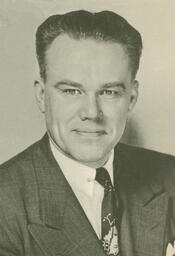
John Linn was the name of at least two notable public figures active in the late eighteenth and early nineteenth centuries: John Linn (1763–1821), a United States Representative from New Jersey, and John Linn, a British Army officer in the Royal Engineers. In addition, a contemporary bearing a similar name, John Blair Linn (1777–1804), was an American poet and clergyman, though he was a distinct individual and not the same person as the New Jersey congressman or the British engineer.
John Linn, the American politician, was born in 1763, a period that placed his early life against the backdrop of the American colonial era and the Revolutionary War. Growing up in what would become the state of New Jersey, he came of age as the colonies moved toward independence and the new nation began to form its political institutions. Although detailed records of his family background, early education, and formative influences are sparse, his later public service suggests that he was sufficiently educated and engaged in civic affairs to participate in the political life of his state and the early United States.
By the early nineteenth century, John Linn had emerged as a significant political figure in New Jersey. He was elected as a U.S. Representative from New Jersey, serving in the United States Congress during the formative decades of the federal government. His tenure placed him among the generation of lawmakers who helped consolidate the structures and practices of the young republic following the ratification of the Constitution. As a member of the House of Representatives, he represented the interests of New Jersey’s citizens at the national level, participating in legislative deliberations during a period marked by debates over federal authority, economic development, and the nation’s position in international affairs. He continued in public life until his death in 1821, closing a career that linked the revolutionary generation to the more settled political order of the early nineteenth century.
Contemporaneous with the American politician was John Linn, a British Army engineer who served in the Royal Engineers. As a Royal Engineer, he would have been part of a specialized corps responsible for military engineering, including fortifications, surveying, construction, and related technical services essential to British military operations. Although specific details of his birth, early training, and individual assignments are not well documented in surviving general references, his identification as a British army engineer indicates that he was professionally trained in the scientific and practical disciplines that underpinned military engineering in the British Empire during a period of frequent conflict and imperial expansion.
A similarly named figure of the era, John Blair Linn, born in 1777, was an American poet and clergyman who should not be confused with Representative John Linn of New Jersey. John Blair Linn gained recognition for his literary work and religious vocation, contributing to the early American literary tradition before his death in 1804. His career illustrates the broader cultural milieu in which the American John Linn, the congressman, lived and worked, a time when the new nation was not only establishing its political institutions but also developing its own artistic and intellectual life.
Congressional Record