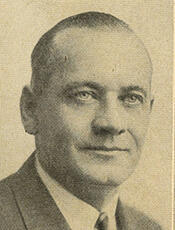
John Lesinski Sr. was a Democratic Representative from Michigan who served in the United States Congress from 1933 to 1951, holding office for nine consecutive terms during a transformative era in American history. Born on January 3, 1885, in Erie, Pennsylvania, he was of Polish descent and moved with his family to Detroit, Michigan, where he became active in the city’s growing Polish-American community. His early life in an industrializing region and among immigrant communities helped shape his later political focus on labor, ethnic constituencies, and local development.
Lesinski’s formal education was limited compared with many later members of Congress, and he entered the workforce at a young age. He became a successful businessman in the Detroit area, particularly in real estate and construction, and emerged as a community leader among Polish Americans. Through his business activities and civic involvement, he gained prominence in Wayne County Democratic circles and built a political base grounded in ethnic organizations, parish life, and neighborhood associations in the Detroit region.
Capitalizing on this local standing, Lesinski was elected as a Democrat to the U.S. House of Representatives in 1932, taking office on March 4, 1933, at the outset of President Franklin D. Roosevelt’s New Deal. He represented a Michigan district centered in the Detroit area and was reelected eight times, serving continuously until January 3, 1951. His tenure in Congress thus spanned the Great Depression, World War II, and the early Cold War. As a member of the House of Representatives, John Lesinski Sr. participated in the democratic process and represented the interests of his constituents during a significant period in American history, contributing to the legislative work that accompanied economic recovery, wartime mobilization, and postwar adjustment.
During his eighteen years in Congress, Lesinski aligned with the Democratic Party’s New Deal and wartime programs and was regarded as a reliable supporter of Roosevelt and later President Harry S. Truman on major domestic and foreign policy initiatives. He worked on issues of importance to industrial Michigan, including labor, veterans’ affairs, and immigration, and was attentive to the needs of the large Polish-American and other ethnic communities in his district. His long service reflected sustained electoral support in a heavily working-class, urban constituency shaped by the auto industry and wartime production.
John Lesinski Sr.’s congressional career ended in 1951, when he left office after his ninth term. He died in office on May 27, 1950, in Dearborn, Michigan, during what would have been the close of his long tenure, and his seat was subsequently filled in the regular electoral process. His death marked the end of his direct role in national politics but not the end of the Lesinski family’s presence in Michigan public life. His son, John Lesinski Jr. (1914–2005), later served as a U.S. Representative from Michigan, continuing the family’s representation of Detroit-area constituencies in Congress, while another relative, T. John Lesinski, became a notable politician and jurist from Wayne County, Michigan.
Congressional Record