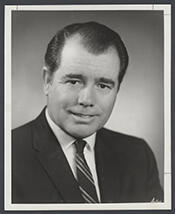
John Morgan Landrum (July 3, 1815 – October 7, 1861) was a Democratic U.S. Representative from Louisiana who served in the 36th Congress from 1859 to 1861. He emerged as a political figure in the turbulent years immediately preceding the American Civil War and left Congress shortly after his state withdrew from the Union, reflecting the deep sectional loyalties of the period.
Details of Landrum’s early life and family background are sparse in the surviving historical record. He was born on July 3, 1815, but contemporary sources do not clearly document his place of birth, his parents, or his upbringing. Likewise, there is no definitive record of his formal education, though his later public career suggests that he attained sufficient learning and professional standing to enter politics in Louisiana. As with many Southern politicians of his generation, it is likely that his early life and education prepared him for participation in the legal or political affairs of his adopted state, but specific institutions or degrees are not firmly established in available accounts.
By the late 1850s, Landrum had become active in Louisiana public life and aligned himself with the Democratic Party, which dominated the politics of the state and the broader South in the antebellum era. His professional and political activities prior to his election to Congress are not extensively documented, but his successful candidacy indicates that he had gained the confidence of Democratic leaders and voters in his district. He was elected as a Democrat to represent Louisiana in the U.S. House of Representatives, taking his seat in the 36th Congress on March 4, 1859, at a time when national debates over slavery, states’ rights, and the future of the Union were rapidly intensifying.
During his tenure in Congress from 1859 to 1861, Landrum served as part of the Southern Democratic bloc in the House of Representatives. The 36th Congress confronted escalating sectional conflict, including disputes over the expansion of slavery into the territories and the political realignments that followed the Dred Scott decision and the rise of the Republican Party. While detailed records of Landrum’s individual speeches, committee assignments, or legislative initiatives are limited, his party affiliation and the political climate of Louisiana suggest that he generally supported the pro-slavery and states’ rights positions advanced by Southern Democrats. His service coincided with the election of Abraham Lincoln in 1860 and the subsequent movement of Southern states toward secession.
Shortly after Louisiana seceded from the Union in January 1861, Landrum vacated his seat in the U.S. House of Representatives. His withdrawal from Congress followed the decision of Louisiana’s secession convention and mirrored the actions of many Southern members of Congress who left federal service when their states left the Union. By relinquishing his position in the 36th Congress, Landrum effectively ended his national legislative career at the outset of the Civil War, aligning his public life with the course chosen by his state.
Following his departure from Congress, Landrum did not return to national office. The historical record provides little detail about his activities during the brief remainder of his life in 1861, including whether he took on any formal role in Confederate or state government, or resumed private professional pursuits in Louisiana. He died on October 7, 1861, only months after the outbreak of the Civil War and less than a year after leaving Congress. His career thus stands as a concise illustration of the trajectory of many Southern politicians whose service in the United States government ended abruptly with secession and the onset of national conflict.
Congressional Record