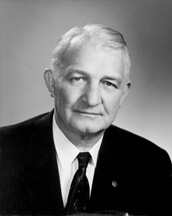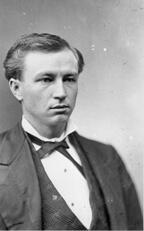
John Edward Kenna (April 10, 1848 – January 11, 1893) was an American politician and lawyer who represented West Virginia in the United States Congress during a significant period in American history. A member of the Democratic Party, he served in the United States House of Representatives beginning in 1877 and then as a United States senator from West Virginia from 1883 until his death in 1893, contributing to the legislative process during five terms in office. Over the course of his congressional career, he participated actively in the democratic process and represented the interests of his constituents in a state undergoing rapid industrial and political change.
Kenna was born on April 10, 1848, in Kanawha County, Virginia (now West Virginia), near the present-day city of St. Albans. He spent his early life at Upper Falls on the Kanawha River, where his father served as lockmaster and operated a sawmill. His formal education was limited, reflecting the frontier conditions of the region and the disruptions of the antebellum and Civil War eras. Despite these constraints, his upbringing in a working river community exposed him early to the economic importance of transportation, timber, coal, and salt—interests that would later shape his legislative priorities.
At the age of sixteen, during the American Civil War, Kenna enlisted in the Confederate States Army and served under General Joseph O. Shelby in the so‑called “Iron Brigade.” He saw active service and was wounded in the conflict. After the war, he returned home to Kanawha County and, lacking extensive formal schooling, pursued the traditional path of “reading law” under the supervision of established attorneys. He was admitted to the bar in 1870, beginning a legal career that quickly brought him into the forefront of the emerging Democratic Party in the newly formed state of West Virginia.
Kenna’s rise in public life was rapid. In 1872 he was elected prosecuting attorney of Kanawha County, a position that gave him practical experience in criminal law and local administration. In 1875 he served as justice pro tempore of the county circuit court, further enhancing his legal reputation and judicial experience. His prominence in state Democratic circles grew during these years, and he became known as an energetic advocate for the economic development of West Virginia, particularly in relation to its natural resources and transportation infrastructure.
In 1876 Kenna was elected to the United States House of Representatives, with his service in Congress beginning in 1877. As a representative, he championed railroad legislation and became a leading proponent of federal support for slack-water navigation on the Kanawha and related waterways. He argued that improved river and rail transportation would benefit the coal, timber, and salt industries that were central to West Virginia’s economy. His effectiveness in promoting these causes and his growing influence within the Democratic Party helped pave the way for his election to the United States Senate, where he took his seat in 1883.
Kenna served as a senator from West Virginia from 1883 until his death in 1893. In the Senate he continued to press for railroad development and navigation improvements, consistently linking these issues to the broader prosperity of his state and region. He rose to become the Democratic minority leader and emerged as a powerful and sometimes controversial orator on questions involving the balance of power between the branches of the federal government. He was particularly noted for his vigorous defense of the independence of the executive branch and for his close alignment with President Grover Cleveland. Kenna forcefully defended Cleveland’s policies on several occasions and sharply criticized the Republican majority in the Senate for what he viewed as its failure to enact meaningful tariff reform.
In addition to his legislative work, Kenna remained active as a lawyer while in public office. A practicing Catholic, he was a member of the congregation at St. Joseph’s on Capitol Hill in Washington, D.C. In late April 1891 he successfully argued the case of Ball v. United States before the Supreme Court of the United States, securing a decision that spared the lives of two West Virginians who had been convicted of murder in Texas. His courtroom success in this high-profile case underscored his continuing legal skill even as he occupied a leading role in national politics. Contemporary observers took note of his personal presence as well; longtime Washington journalist Benjamin Perley Poore described him as “a tall, thick-set man” who was “negligent in his dress and rather slow in the utterance of his sentences.”
Kenna’s later years were marked by declining health. He suffered from heart disease for several years but remained in office and continued his senatorial duties. He died in Washington, D.C., on January 11, 1893, at the age of forty-four, while still serving in the Senate. Following his death, he was succeeded in the Senate by Johnson N. Camden. Kenna left a family of six children, among them Ed Kenna, and his name and legacy endured in his home state. The town of Kenna, West Virginia, was named in his honor, and in 1901 the state of West Virginia donated a marble statue of John Edward Kenna to the National Statuary Hall Collection in the United States Capitol, commemorating his service as a leading Democratic statesman and advocate for the economic development of West Virginia during the late nineteenth century.
Congressional Record