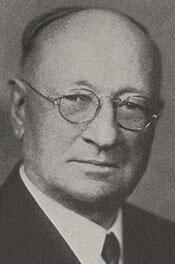
John Jennings Jr., also known as John Jennings (American politician), was born on June 6, 1880, in Jacksboro, Campbell County, Tennessee. He was the son of John Jennings Sr. and grew up in the rural, mountainous region of East Tennessee, an area with a strong tradition of Unionist and later Republican politics dating back to the Civil War. His early life in this largely agricultural community helped shape his understanding of the economic and social concerns of small-town and rural Tennesseans, concerns that would later inform his public service.
Jennings attended the public schools of Campbell County and pursued further studies in preparation for a career in law. He studied at American Temperance University in Harriman, Tennessee, an institution that combined higher education with the era’s reformist emphasis on temperance and civic responsibility. After completing his legal studies, he was admitted to the bar in 1903 and began the practice of law in Jacksboro. His legal work quickly brought him into contact with a broad cross-section of local citizens, reinforcing his familiarity with the legal and economic challenges facing his region.
Jennings’s public career began at the county level. He served as county attorney of Campbell County from 1911 to 1918, a role in which he represented the county’s interests and gained experience in public administration and local governance. In 1918 he moved to Knoxville, Tennessee, where he continued to practice law. His reputation as a capable attorney and his alignment with the Republican Party in a predominantly Democratic state positioned him as a significant figure in East Tennessee politics. Over the next two decades, he remained active in legal practice and party affairs, building the base of support that would eventually carry him to national office.
Jennings entered national politics at a pivotal moment in American history. A member of the Republican Party, he was elected as a U.S. Representative from Tennessee to the Seventy-sixth Congress in a special election held on November 8, 1939, filling the vacancy caused by the death of Representative J. Will Taylor. He took his seat representing Tennessee’s 2nd Congressional District, centered on Knoxville and surrounding East Tennessee counties. He was subsequently reelected to the Seventy-seventh, Seventy-eighth, Seventy-ninth, Eightieth, and Eighty-first Congresses, serving continuously from November 8, 1939, to January 3, 1951, for a total of six terms in office.
Jennings’s congressional service coincided with a transformative era in American and world affairs, encompassing the final years of the Great Depression, the entirety of World War II, and the early Cold War period. As a member of the House of Representatives, he participated in the democratic process and contributed to the legislative work of Congress during these critical years. He represented the interests of his East Tennessee constituents while engaging with national issues such as wartime mobilization, postwar economic adjustment, and the expansion of federal programs that affected agriculture, industry, and veterans. Within the framework of Republican Party positions of the time, he worked to balance regional concerns with the broader national agenda emerging in Washington, D.C.
In the 1950 election, Jennings was an unsuccessful candidate for renomination, bringing his congressional career to a close on January 3, 1951. After leaving the House of Representatives, he returned to Knoxville and resumed the practice of law, drawing on his long experience in both local and national public life. In his later years, he remained a respected figure in East Tennessee, emblematic of the region’s enduring Republican tradition and its engagement with mid-twentieth-century national politics.
John Jennings died on February 27, 1956, in Knoxville, Tennessee. He was interred in Lynnhurst Cemetery in Knoxville. His twelve years in the U.S. House of Representatives, from 1939 to 1951, marked a period of sustained service during some of the most consequential decades in modern American history, during which he consistently sought to represent and advance the interests of his Tennessee constituents within the broader legislative process.
Congressional Record