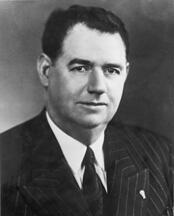
John Hunter (c. 1750–1802) was an American politician and planter who represented South Carolina in the United States Congress as a member of the Republican Party. Serving during a formative era in the early republic, he contributed to the legislative process over two terms in office, participating in the democratic institutions that were taking shape after the American Revolution and representing the interests of his South Carolina constituents at the national level.
Hunter was born around 1750, likely in the Province of South Carolina, during the period of British colonial rule in North America. Little is documented about his early life, family background, or youth, but he came of age in a society dominated by plantation agriculture and the emerging tensions between the colonies and Great Britain. This environment, shaped by the economic and political structures of the southern colonies, provided the context for his later public career and his alignment with the agrarian interests that would characterize much of South Carolina’s early political leadership.
Details of Hunter’s formal education are not well recorded, which was not uncommon for public men of his generation in the South. He likely received the kind of practical education typical of the planter class, emphasizing land management, commerce, and local governance rather than extensive university training. His subsequent rise to political office suggests he was regarded as a capable and informed figure within his community, able to navigate both local concerns and the broader issues facing the new nation.
By the time the United States federal government was established under the Constitution in 1789, Hunter had become active in public affairs in South Carolina. As a member of the Republican Party—often referred to in this period as the Democratic-Republican Party—he aligned himself with the political movement associated with Thomas Jefferson and James Madison, which favored limited federal authority, a strict interpretation of the Constitution, and the protection of agrarian and states’ rights interests. From this ideological standpoint, Hunter entered national service as a representative of South Carolina.
Hunter’s service in Congress encompassed two terms in the United States House of Representatives, during which he participated in the legislative process at a time when the young republic was defining its institutions, policies, and political alignments. Serving as a Republican from South Carolina, he took part in debates over the balance of power between the federal government and the states, the direction of the national economy, and the role of the United States in international affairs in the wake of the American Revolution and amid the upheavals of the French Revolutionary era. His tenure coincided with a significant period in American history, as the first party system solidified and sectional interests, particularly those of the southern slaveholding states, began to shape congressional deliberations.
As a representative, Hunter’s primary responsibility was to advocate for the needs and priorities of his South Carolina constituents. These included issues related to agriculture, trade, and the regulation of commerce that affected the state’s plantation-based economy. By participating in the democratic process in the national legislature, he helped give voice to South Carolina’s regional concerns within the broader framework of federal policymaking. His role in Congress thus linked local interests with the evolving national agenda during the early years of the United States.
John Hunter’s public career concluded in the early nineteenth century, and he died in 1802. His life and service spanned the transition from colonial rule to independent nationhood, and his congressional tenure placed him among the early generation of lawmakers who helped establish the patterns of party politics and regional representation that would shape the United States in the decades to come.
Congressional Record