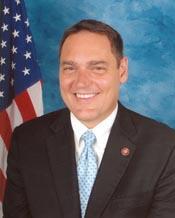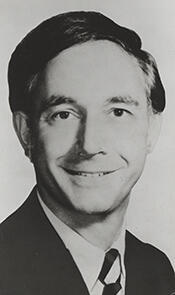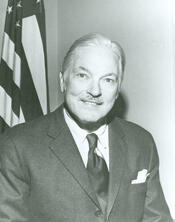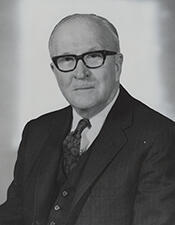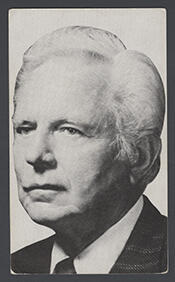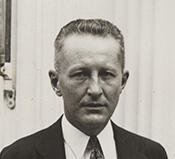
John Baker Hollister (November 7, 1890 – January 4, 1979) was a three-term U.S. Representative from Ohio, serving in the United States Congress from 1931 to 1937. A member of the Republican Party, he represented his constituents during a significant period in American history, contributing to the legislative process over three consecutive terms in the House of Representatives.
Hollister was born in Cincinnati, Ohio, on November 7, 1890. He attended local schools in Cincinnati before enrolling at St. Paul’s School in Concord, New Hampshire. He went on to Yale University, from which he graduated in 1911. Following his undergraduate studies, he spent a year at the University of Munich in Germany, broadening his academic experience abroad. He then entered Harvard Law School, earning his law degree in 1915. That same year he was admitted to the bar and began the practice of law in his native Cincinnati.
With the entry of the United States into World War I, Hollister entered military service. On August 15, 1917, he was appointed a first lieutenant in the United States Army. He served in France and rose to the rank of captain of Battery B, Forty-sixth Artillery Corps, later assuming command of the Third Battalion of his regiment. After the Armistice, he continued his service in a humanitarian capacity. In 1919 he was placed on detached service with the American Relief Administration under Herbert Hoover and was assigned to the ARA Baltic Mission as relief administrator in Lithuania, serving there until August 1919.
After his discharge from wartime and relief duties, Hollister returned to Cincinnati and resumed his law practice. In addition to his legal work, he became active in civic and educational affairs. He served as a member of the Cincinnati Board of Education from 1921 to 1929, helping to oversee the city’s public schools during a period of growth and modernization. He also served as a director of various financial and manufacturing corporations, reflecting his engagement with the city’s business and economic life.
Hollister’s congressional career began with a special election. Following the death of Speaker Nicholas Longworth, he was elected as a Republican to the Seventy-second Congress in a special election held on November 3, 1931, to fill the resulting vacancy. He was subsequently reelected to the Seventy-third and Seventy-fourth Congresses, serving from November 3, 1931, to January 3, 1937. During these three terms in office, he participated in the democratic process in the House of Representatives and represented the interests of his Ohio constituents at a time marked by the Great Depression and the early New Deal era. A member of the Republican Party, he contributed to legislative debates and policymaking during this transformative period. He was defeated for reelection in 1936 and then returned to Cincinnati to resume the practice of law.
In the years following his congressional service, Hollister remained active in national and international affairs. He served as a delegate to the Republican National Conventions in 1940, 1944, 1948, and 1952, maintaining a role in shaping his party’s platforms and leadership choices. In 1945 he headed the United Nations Relief and Rehabilitation Administration’s mission to the Netherlands, participating in post–World War II relief and reconstruction efforts. He later served as executive director of the Commission on Organization of the Executive Branch of the Government, commonly known as the Hoover Commission, from October 1953 to July 1955, working on efforts to improve the efficiency and organization of the federal executive branch. From June 15, 1955, until his resignation on September 13, 1957, he was director of the International Cooperation Administration, an agency responsible for administering U.S. foreign assistance programs during the early Cold War.
Hollister eventually returned to Cincinnati, where he lived in retirement. He died there on January 4, 1979, at the age of 88. His remains were cremated, and his ashes were interred in Spring Grove Cemetery in Cincinnati, closing a long life marked by service in law, education, the military, Congress, and international relief and cooperation.
Congressional Record