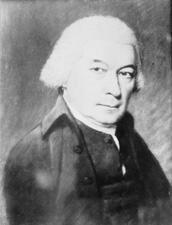
John Sloss Hobart (May 6, 1738 – February 4, 1805) was a United States senator from New York, a member of the Federalist Party, and a United States district judge of the United States District Court for the District of New York. His service in Congress and on the federal bench occurred during a formative period in American history, and he played a notable role in both the Revolutionary era and the early years of the United States government.
Hobart was born on May 6, 1738, in Fairfield, Fairfield County, in the Connecticut Colony, then part of British America. He pursued a classical education and graduated from Yale University in 1757. After completing his studies, he read law, was admitted to the bar, and commenced legal practice in New York. His early legal career unfolded against the backdrop of rising colonial resistance to British authority, and he soon became involved in the political and civic affairs of the period.
As tensions with Great Britain intensified, Hobart emerged as an active participant in the patriot cause. He served as a member of the Committee of Correspondence in 1774, a body that facilitated communication and coordination among the colonies in opposition to British policies. In 1775 he was a deputy to the Provincial Convention, and from 1775 to 1777 he served as a deputy to the Provincial Congress of New York, which functioned as a revolutionary governing body. In 1777 he was a member of the Council of Safety, which oversaw the security and administration of New York during the Revolutionary War. He also took part in the Hartford Convention of 1780, a wartime meeting of New England and New York delegates concerned with the conduct and support of the war effort.
Hobart’s judicial career began during the Revolutionary era. In 1777 he was appointed an associate justice of the Supreme Court of Judicature of New York, the highest court in the state at that time, a position he held from 1777 to 1798. In this capacity he helped shape the early jurisprudence of New York as it transitioned from a British colony to an American state. He further contributed to the establishment of the new federal system by serving as a member of the New York convention that ratified the United States Constitution in 1788, supporting the framework that created the federal government under which he would later serve.
A committed Federalist, Hobart entered national legislative service at the close of the 18th century. He was elected to the United States Senate from New York as a member of the Federalist Party to fill the vacancy caused by the resignation of Senator Philip Schuyler. He took his seat on January 11, 1798, and served in the Senate until April 16, 1798. During this one term of service in Congress, he participated in the legislative process at a time when the young republic was confronting issues of foreign policy, internal organization, and the balance of power between the federal government and the states. His brief tenure nonetheless reflected his continued engagement in the democratic process and his representation of New York’s interests at the national level.
Hobart resigned from the Senate in April 1798 to accept a federal judicial appointment. President John Adams nominated him on April 11, 1798, to a seat on the United States District Court for the District of New York, filling the vacancy created by the resignation of Judge Robert Troup. The United States Senate confirmed his nomination on April 12, 1798, and he received his commission the same day. As a United States district judge, Hobart presided over federal cases in New York during a period marked by the development of federal judicial authority and the early interpretation of national laws.
John Sloss Hobart’s service on the federal bench continued until his death on February 4, 1805, in New York City, New York. His tenure as a United States district judge thus extended from April 12, 1798, to February 4, 1805. He was interred in Trinity Church Cemetery in New York City. Through his work as a revolutionary-era legislator, state jurist, United States senator, and federal judge, Hobart contributed significantly to the legal and political foundations of both New York and the United States.
Congressional Record