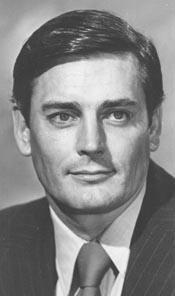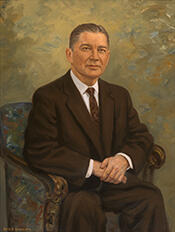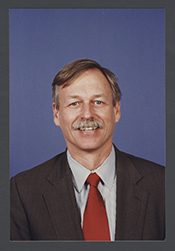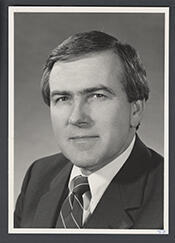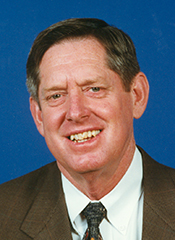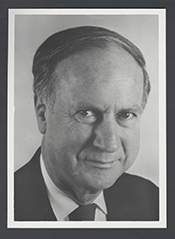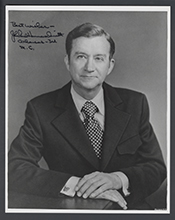
John Paul Hammerschmidt (May 4, 1922 – April 1, 2015) was an American politician and businessman from Arkansas who served as a Republican Representative in the United States House of Representatives from 1967 to 1993. Over 13 consecutive terms, he represented Arkansas’s 3rd congressional district, located in the northwestern quadrant of the state, and became the first Republican elected to the U.S. House from Arkansas since Reconstruction. His long tenure in Congress coincided with a period of significant political realignment in the South and major national developments in domestic and foreign policy.
Hammerschmidt was born in Harrison, Boone County, Arkansas, the fourth of five children of Arthur Paul Hammerschmidt and the former Junie Mildred Taylor. Both sets of his grandparents, of German descent, had migrated to Boone County in the early years of the 20th century. He grew up in Harrison and graduated from Harrison High School in 1938. He then pursued higher education at several institutions, attending The Citadel in Charleston, South Carolina, from 1938 to 1939 and the University of Arkansas in Fayetteville from 1940 to 1941, before his studies were interrupted by World War II.
During World War II, Hammerschmidt served in the United States Army Air Corps. In 1942, he joined the 3rd Combat Cargo Group and served in the China-Burma-India theater until the end of the war in 1945. For his wartime service he received the Distinguished Flying Cross with three oak leaf clusters, reflecting repeated acts of heroism or extraordinary achievement in aerial flight. After the war, he continued his association with the military, serving in the United States Air Force Reserve from 1945 to 1960 and later in the District of Columbia Army Reserve from 1977 to 1981. His military experience and aviation background were later reflected in his legislative interests and in his appointment to national aviation security bodies.
Following his return from military service, Hammerschmidt resumed his education and attended Oklahoma A&M College (now Oklahoma State University) in Stillwater, Oklahoma, from 1945 to 1946, earning a Bachelor of Science degree. He then entered the lumber and construction business in his hometown. He joined the Hammerschmidt Lumber Company, founded by his grandfather, eventually becoming its president. He also served as president of the Construction Products Company, the Arkansas Lumber Dealers Association, and the Southwestern Lumberman’s Association. These business roles established him as a prominent figure in Arkansas’s commercial community and provided a platform for his later political career.
Hammerschmidt became active in Republican politics at a time when the party was still a minority in Arkansas. He served as state chairman of the Republican Party of Arkansas from 1964 to 1966, and later again from 2002 to 2004, helping to build the party’s organizational strength over several decades. He was a delegate to the Republican National Conventions in 1964, 1968, 1972, 1976, 1980, 1984, and 1988, reflecting his growing influence within the party at both the state and national levels. In the 1966 election, he won the Republican nomination for Arkansas’s 3rd congressional district and then defeated 11-term Democratic incumbent James William Trimble by more than nine thousand votes. With this victory he became the first Republican to represent Arkansas in Congress since Reconstruction, signaling the beginning of a broader partisan shift in the region. The 3rd district, which had begun to move away from its “Solid South” Democratic roots earlier than other parts of the state, increasingly split its tickets at the federal level and would support Democratic presidential candidates only rarely after the 1950s.
In Congress, Hammerschmidt served from January 3, 1967, to January 3, 1993, spanning the 90th through the 102nd Congresses. Over his 26 years in the House of Representatives, he participated actively in the legislative process and represented the interests of his northwestern Arkansas constituents during a period marked by the Vietnam War, the civil rights era, the Watergate scandal, the Cold War’s final decades, and the emergence of new economic and environmental issues. He developed a reputation as a reliable conservative on foreign policy and social issues, while maintaining a somewhat more moderate record on economic matters. Among his positions, he supported a proposed constitutional amendment to permit laws against flag desecration. He also served as a member of the President’s Commission on Aviation Security and Terrorism (PCAST), organized in September 1989 to review and report on aviation security policy in the aftermath of the bombing of Pan Am Flight 103 on December 21, 1988, drawing on his military aviation background. During his House service he did not vote on the Abandoned Shipwreck Act of 1987.
Hammerschmidt’s electoral record reflected his strong personal popularity in a district that had historically been represented by Democrats at the federal level and where Democrats continued to dominate most state and local offices well into the 1990s. After his initial victory in 1966, he was reelected 12 more times. He faced only a few competitive races; in most elections his Democratic opponents failed to receive even one-third of the vote. One notable exception came in 1974, a year of national Democratic strength in the wake of Watergate, when he secured his fifth term by defeating 28-year-old Bill Clinton, then a University of Arkansas law professor, by approximately 6,400 votes. Clinton had criticized Hammerschmidt for being one of the relatively few Republicans who continued to support President Richard Nixon during the Watergate scandal. Other comparatively stronger Democratic challenges came from Hardy Croxton in 1968, Donald Poe in 1970, and James McDougal, a former associate of Clinton, in 1982. In 1976, the district “reverted to form” when Hammerschmidt ran unopposed. In 1978, facing only weak opposition from Hot Springs real estate broker William C. Mears, he was able to devote resources to assisting Republican gubernatorial nominee A. Lynn Lowe, a farmer from Texarkana and then state party chairman, who nonetheless lost the governor’s race to Bill Clinton by a margin of 63 percent to 37 percent. Hammerschmidt retired from Congress in 1993, leaving the House in the same month that Bill Clinton, his former challenger, assumed the presidency.
In his later years, Hammerschmidt remained active in public and civic life in Arkansas. From 1999 to 2004, he served as a trustee of Arkansas State University at Jonesboro, contributing to higher education governance in the state. A fellowship at the University of Arkansas–Fort Smith was established in his name to enable a university student to work in the 3rd congressional district office, reflecting his longstanding commitment to constituent service and public affairs. Several public honors recognized his contributions: the John Paul Hammerschmidt Federal Building near the Fayetteville Historic Square houses the Fayetteville office of the United States District Court for the Western District of Arkansas; Interstate 49 in Arkansas is designated the John Paul Hammerschmidt Highway in northwest Arkansas; and in 1990 he was inducted into the Arkansas Aviation Hall of Fame by the Arkansas Aviation Historical Society, acknowledging both his wartime service and his work on aviation-related issues.
Hammerschmidt was a Presbyterian and was active in numerous veterans’ and civic organizations, including the American Legion, Veterans of Foreign Wars, the Freemasons, Shriners, Elks, and Rotary International. He also held alumni status with the Alpha Zeta chapter of the Pi Kappa Alpha fraternity at the University of Arkansas at Fayetteville. He married Virginia Ann Sharp, and the couple enjoyed a marriage of 58 years until her death on January 2, 2006, at the age of 77. John Paul Hammerschmidt died on April 1, 2015, at the age of 92, of heart and respiratory failure at a hospital in Springdale, Arkansas. His long career in business, military service, and public office left a lasting imprint on Arkansas and on the modern development of the Republican Party in the state.
Congressional Record