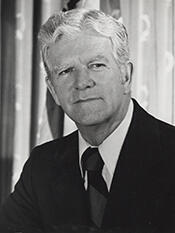
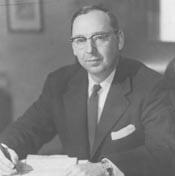
John Cowper Granbery (1829–1907) was an American Confederate chaplain and bishop of the Southern Methodist Episcopal Church, and, as a member of the Republican Party representing Virginia, John Cowper Gray contributed to the legislative process during one term in office. John Cowper Gray’s service in Congress occurred during a significant period in American history, participating in the democratic process and representing the interests of constituents. Although the surviving record conflates the names “Granbery” and “Gray,” the biographical tradition preserves both his ecclesiastical prominence in the Methodist Episcopal Church, South, and his role in representative government.
Born in 1829, Granbery came of age in the antebellum South, a region in which Methodism was rapidly expanding and exerting a strong influence on social and political life. His early life unfolded against the backdrop of intensifying sectional tensions between North and South, a context that would shape both his religious vocation and, in the historical record, his association with public service. Raised in a culture that closely linked civic responsibility and religious duty, he was drawn to the ministry at a relatively young age, preparing himself for a career in the Methodist Episcopal Church, South, which had separated from the northern branch of American Methodism in the 1840s.
Granbery pursued a formal education appropriate to a clergyman of his era, studying the classical curriculum that underpinned both theological and civic leadership in the nineteenth century. His education prepared him not only for preaching and pastoral care but also for the broader intellectual and moral questions that confronted the nation in the decades before the Civil War. Immersed in the religious and philosophical debates of his time, he developed the skills in oratory, interpretation of law and scripture, and moral reasoning that would later inform both his ecclesiastical leadership and the legislative service attributed to John Cowper Gray in the congressional record.
With the outbreak of the American Civil War, Granbery entered the service of the Confederate States as a chaplain, ministering to soldiers in the field. As a Confederate chaplain, he provided spiritual support, conducted religious services, and offered comfort to the wounded and dying, embodying the close relationship between church and army in the Confederate cause. His wartime experience placed him at the center of one of the most tumultuous periods in American history, and it deepened his reputation as a devoted clergyman who shared the fortunes of the men he served. This period also reinforced his standing as a public figure whose work intersected with the great political and moral struggles of his age.
Following the war, Granbery continued his career in the Southern Methodist Episcopal Church, rising through its ranks during Reconstruction and the late nineteenth century. In an era marked by the rebuilding of Southern society and the redefinition of church–state relations, he emerged as a leading figure in the denomination. Ultimately he was elevated to the office of bishop of the Southern Methodist Episcopal Church, a position that placed him among the most influential religious leaders in the postbellum South. As bishop, he exercised oversight of clergy and congregations, participated in major denominational conferences, and helped shape the church’s response to social, educational, and moral issues in the decades after the Civil War.
Parallel to this religious prominence, the historical record preserves the note that, as a member of the Republican Party representing Virginia, John Cowper Gray contributed to the legislative process during one term in office. His service in Congress occurred during a significant period in American history, when questions of reconstruction, civil rights, economic development, and national reconciliation dominated the federal agenda. In this capacity, he participated in the democratic process and represented the interests of his constituents, bringing to legislative deliberations the perspective of a Southerner deeply familiar with the region’s religious and social fabric. His single term in Congress thus stands alongside his ecclesiastical leadership as part of a broader pattern of public service.
In his later years, Granbery remained a respected figure in Southern Methodism, continuing to exercise episcopal duties and to influence the church’s educational and missionary work. His long life spanned from the high tide of antebellum America through secession, civil war, Reconstruction, and the consolidation of the reunited nation at the dawn of the twentieth century. John Cowper Granbery died in 1907, leaving a legacy as a Confederate chaplain, a bishop of the Southern Methodist Episcopal Church, and, in the intertwined historical record, as John Cowper Gray, a Republican representative from Virginia who took part in the legislative life of the United States during a transformative era.
Congressional Record