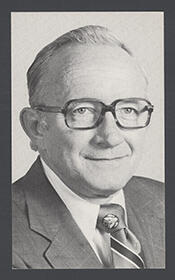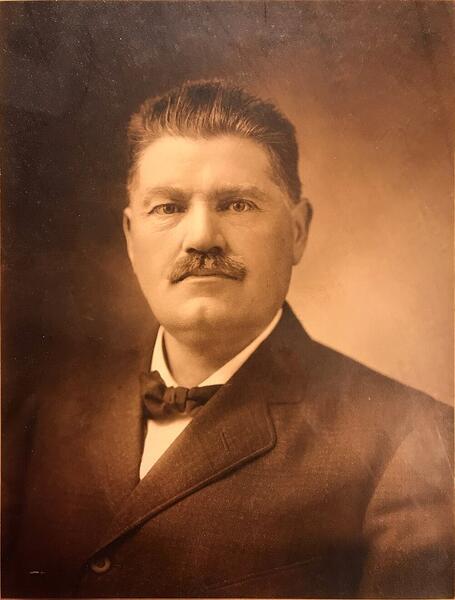
John Gaston Grant (January 1, 1858 – June 21, 1923) was an American politician from North Carolina who served one term in the United States House of Representatives in the early twentieth century. A steadfast Republican in a predominantly Democratic region, he built his public career out of modest rural beginnings and became a notable figure in the political life of western North Carolina.
Grant was born on January 1, 1858, in a log cabin in Edneyville Township, Henderson County, North Carolina. He was the fifth child of William Colin Grant and Sarah Elizabeth (Freeman) Grant, both of Henderson County. Raised in a rural, agrarian environment in the post–Civil War South, he did not receive extensive formal schooling and was largely self-educated. His early life in the mountains of western North Carolina, combined with his self-directed education, helped shape his reputation as a plainspoken, independent-minded local leader.
On March 30, 1876, Grant married Zsa Zura Edney in Henderson County, North Carolina, further anchoring his life and work in the community in which he had been born and raised. Throughout his adult life he engaged in agricultural pursuits, reflecting both his personal background and the economic base of his region. From an early age he identified with the Republican Party, then often referred to in his area as the “Radical” party, and he remained a lifelong Republican at a time when the Democratic Party dominated state politics. His partisan stance and populist style drew attention from local Democratic-leaning newspapers, and he was derisively nicknamed “Cornbread John” by The French Broad Hustler, a publication based in nearby Hendersonville.
Grant’s public career began in state and local office. He was elected a member of the North Carolina House of Representatives in 1889, representing his home area in the state legislature during a period of political realignment and contest over Reconstruction-era policies and their aftermath. After serving that term, he declined renomination, a pattern that would recur in his later public service. He subsequently held county office as sheriff of Henderson County from 1892 to 1896. As sheriff he was responsible for law enforcement and the administration of county justice in a largely rural jurisdiction. At the conclusion of his term in 1896 he again refused renomination, returning to private life and his agricultural interests while remaining active in Republican politics.
Building on his local and state experience, Grant advanced to national office in the first decade of the twentieth century. He was elected as a Republican to the Sixty-first Congress and served in the U.S. House of Representatives from March 4, 1909, to March 3, 1911. Representing a western North Carolina district during the administration of President William Howard Taft, he was part of a small but persistent Republican presence from the mountain counties, which were more receptive to the party than much of the rest of the state. During his term in Congress he aligned with the Republican program of the era, though his tenure was limited to a single term.
In 1910 Grant was an unsuccessful candidate for reelection to the Sixty-second Congress, losing his bid to continue in national office amid the broader Democratic resurgence in North Carolina and the South. After his defeat he returned to Henderson County and resumed his agricultural pursuits, remaining a figure of local prominence but no longer holding elective office. He continued to reside in the region where he had been born, maintaining his ties to the community and the party with which he had long been associated.
John Gaston Grant died in Hendersonville, North Carolina, on June 21, 1923. His life traced the trajectory of a self-educated mountain farmer who rose to serve in local, state, and national office, reflecting both the political distinctiveness of western North Carolina and the opportunities available to determined Republican leaders in the post-Reconstruction South.
Congressional Record