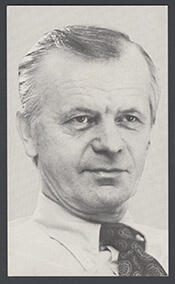
John Bachop Gilfillan (February 11, 1835 – August 19, 1924) was an American politician, lawyer, banker, and educational benefactor from Minnesota who was active in the late nineteenth and early twentieth centuries. A member of the Republican Party representing Minnesota, he contributed to the legislative process during one term in the United States Congress, serving during a significant period in American history and representing the interests of his constituents in the democratic process.
Gilfillan was born on February 11, 1835, in Caledonia County, Vermont. He was educated in local institutions, attending Caledonia County Grammar School and then Caledonia County Academy. At the age of seventeen he began teaching school, an early indication of the interest in education that would characterize much of his later public life. In 1855 he traveled west to visit his sister, Mrs. John Martin, in St. Anthony, Hennepin County, Minnesota. Impressed by the opportunities in the growing frontier community, he decided to remain in Minnesota and make his career there.
Soon after settling in St. Anthony, Gilfillan became involved in local public affairs. His first political position was as a member of the region’s first school board, reflecting his long-standing advocacy for public education. He drafted legislation that organized the graded school system in Minneapolis, helping to shape the structure of elementary education in the city. During this period he studied law, was admitted to the bar, and began the practice of law in 1860. He served four terms as municipal attorney for St. Anthony, Minnesota, establishing himself as a prominent local lawyer. By 1863 he had been elected county attorney for Hennepin County, a position he held for about ten years, though he was briefly replaced by George Robinson from 1867 to 1869. From 1865 until 1869 he also served as a city alderman, combining municipal legislative duties with his prosecutorial responsibilities. Before seeking higher office, he practiced law in the firm of Lochren, McNair and Gilfillan, one of the leading legal partnerships in the region.
In 1873 Gilfillan became embroiled in a widely publicized international incident involving the adventurer known as Lord Gordon Gordon. Acting at the behest of financier Jay Gould, he participated in an attempt to seize Gordon in Canada in connection with a stock fraud dispute. Gilfillan was arrested along with Gould, Loren Fletcher, and Eugene McLanahan Wilson. Their detention by Canadian authorities led to diplomatic tensions, and they were ultimately released on bail after intervention and diplomatic pressure by Minnesota Governor Horace Austin. Despite the controversy, Gilfillan’s political career continued to advance in Minnesota.
Voters elected Gilfillan to his first statewide office in a special election to the Minnesota State Senate in 1875. He served there for a decade, representing first District 25 and later District 28. As a state senator he was active in legislative matters affecting education, land, and Native American policy. In 1881 he sponsored a bill to grant the Chippewa (Ojibwe) citizenship and the right to vote, reflecting his engagement with questions of civil status and rights for Indigenous peoples within the state. While in the Senate he served on the Committee of University Lands and played a key role in the development of the University of Minnesota’s Agricultural Experiment Station, which supported scientific farming and agricultural research in the state.
Gilfillan’s prominence in state politics and law led to his selection for national office. A Republican, he was elected to the United States House of Representatives from Minnesota’s 4th congressional district, serving one term in Congress. His service in Congress occurred during a significant period in American history in the 1880s, when issues of economic development, western settlement, and federal Indian policy were central to national debate. He represented Minnesota in the Forty-ninth Congress, participating in the legislative process on behalf of his constituents. He was not re-elected in 1886, when St. Paul mayor Edmund Rice defeated him. After his electoral defeat, Gilfillan undertook extensive travel in Europe and the Middle East, broadening his experience beyond American public life.
Parallel to his legislative and legal work, Gilfillan was deeply involved in higher education and finance. In 1880 Minnesota Governor John S. Pillsbury appointed him a regent of the University of Minnesota. He served as a regent for eight years and afterward continued in an advisory capacity, maintaining a close relationship with the institution. His work on the Committee of University Lands and his advocacy were instrumental in securing and developing the University’s Agricultural Experiment Station. In 1901 he endowed the University of Minnesota with $50,000 for student scholarships, a substantial gift that underscored his commitment to expanding educational opportunity. In the business sphere, Gilfillan became president of the First National Bank in 1903. He later served on the bank’s board of directors from 1905 until at least 1907, contributing to the financial development of Minneapolis during a period of rapid urban and commercial growth.
Gilfillan’s personal life reflected both his New England origins and his long residence in Minnesota. He married twice. His first marriage took place in Vermont in 1870, when he wed Rebecca Corse Oliphant. The couple had four surviving children, three sons and one daughter. Rebecca died in 1884, shortly before Gilfillan left the state senate to seek national office. In 1893 he married Hannah Lavinia Coppock in Chicago; she survived him by more than a decade, living until 1937. Throughout his adult life Gilfillan was identified with the Republican Party and was active in civic and professional organizations, including the Minneapolis Club and the Minnesota State Bar Association. He was also a member of Westminster Presbyterian Church in Minneapolis.
John Bachop Gilfillan died on August 19, 1924, in Minnesota. He was interred at Lakewood Cemetery in Minneapolis. His long career as lawyer, municipal and county official, state senator, congressman, university regent, banker, and educational benefactor linked the early frontier era of Minnesota with its emergence as a mature state, and his work in law, education, and finance left a lasting imprint on the civic life of Minneapolis and the wider region.
Congressional Record