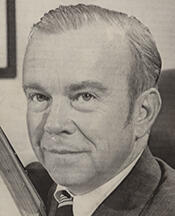
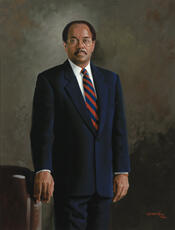
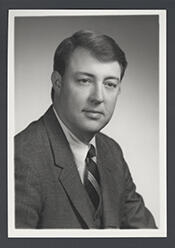
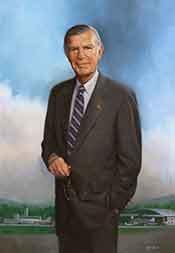
John Galbraith was the name of several notable public figures in North America and the United Kingdom whose careers spanned politics, economics, academia, and public life from the late eighteenth through the late twentieth centuries. Among the most prominent was John Kenneth Galbraith (born October 15, 1908, in Iona Station, Ontario, Canada; died April 29, 2006, in Cambridge, Massachusetts), a Canadian-American economist whose work and public service made him one of the best-known economists of the twentieth century. Another was John Galbraith (born August 2, 1794, in Huntingdon, Pennsylvania; died June 15, 1860, in Erie, Pennsylvania), a Pennsylvania politician who served in the United States House of Representatives in the mid-nineteenth century. The name was also borne by John B. Galbraith (1828–1869), an American politician from Florida; John Galbraith (born February 25, 1923; died August 25, 2021), an American politician who served as a member of the Ohio House of Representatives; John Semple Galbraith (1916–2003), a British historian and former Chancellor of the University of California, San Diego; John Galbraith Graham (1921–2013), a British crossword compiler; and Jack Galbraith (born 1898), a Scottish footballer.
John Kenneth Galbraith grew up on a farm in rural Ontario, an upbringing that shaped his later interest in land economics and agricultural policy. He studied at the Ontario Agricultural College, then affiliated with the University of Toronto, receiving a Bachelor of Science in 1931. He continued his education in the United States at the University of California, Berkeley, where he earned a Ph.D. in agricultural economics in 1934. After brief teaching appointments, he joined the faculty of Harvard University, where he would spend most of his academic career, becoming a central figure in the development of institutional and Keynesian economics in the United States.
During World War II, John Kenneth Galbraith entered government service, working in Washington, D.C., on price control and wartime economic mobilization. He served as the head of the Price Section of the Office of Price Administration, where he helped design and administer policies intended to curb inflation and stabilize the wartime economy. After the war he participated in the U.S. Strategic Bombing Survey in Europe, analyzing the economic effects of Allied bombing. Returning to Harvard, he became widely known to the broader public through a series of influential books, including “The Affluent Society” (1958) and “The New Industrial State” (1967), in which he analyzed the power of large corporations, the role of government in modern economies, and the social consequences of economic growth.
In addition to his academic work, John Kenneth Galbraith played an active role in American political life. A prominent adviser to Democratic politicians, he was closely associated with Adlai Stevenson and John F. Kennedy. In 1961 President Kennedy appointed him United States Ambassador to India, a post he held until 1963. In New Delhi he worked to strengthen U.S.–Indian relations during a period marked by Cold War tensions and regional conflicts, including the Sino-Indian War of 1962. After his ambassadorship he returned to Harvard, continued to write prolifically on economics and public affairs, and remained an influential public intellectual until his death in Cambridge, Massachusetts, on April 29, 2006.
John Galbraith of Pennsylvania was born on August 2, 1794, in Huntingdon, Pennsylvania, and moved with his family to Centre County in his youth. He studied law, was admitted to the bar, and commenced practice in Pennsylvania. Entering public life in the Jacksonian era, he was elected as a Jacksonian to the Twenty-third Congress (serving from March 4, 1833, to March 3, 1835) and was later elected as a Democrat to the Twenty-sixth Congress (serving from March 4, 1839, to March 3, 1841), representing Pennsylvania in the U.S. House of Representatives. His congressional service placed him in the midst of debates over banking, tariffs, and internal improvements that characterized the antebellum period. After leaving Congress he resumed the practice of law and remained active in local affairs in Erie, Pennsylvania, where he died on June 15, 1860.
Other individuals bearing the name John Galbraith also held significant public or professional roles. John B. Galbraith (1828–1869) was an American politician from Florida who participated in state political life in the mid-nineteenth century, a period marked by secession, Civil War, and Reconstruction. John Galbraith of Ohio, born on February 25, 1923, served as a member of the Ohio House of Representatives, contributing to state legislative work in the mid-to-late twentieth century before his death on August 25, 2021. Beyond politics, John Semple Galbraith (1916–2003) was a British historian who specialized in British imperial history and served as Chancellor of the University of California, San Diego, helping to guide the institution’s development. John Galbraith Graham (1921–2013) became well known in the United Kingdom as a crossword compiler, particularly under the pseudonym “Araucaria” for The Guardian newspaper, and Jack Galbraith (born 1898) was a Scottish footballer who played professionally in the early twentieth century.
Taken together, these men named John Galbraith occupied influential positions in economics, national and state legislatures, university leadership, journalism and popular culture, and sport. Their careers, stretching from the early republic in the United States through the high Cold War and into the late twentieth century, illustrate the diverse ways in which individuals bearing the same name contributed to public life in North America and the United Kingdom.
Congressional Record