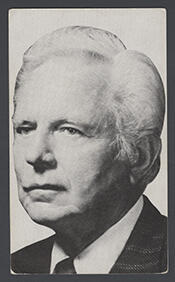
John Fassett Follett (February 18, 1831 – April 15, 1902) was a U.S. Representative from Ohio who served one term in Congress from 1883 to 1885. A member of the Democratic Party, he participated in the legislative process during a significant period in American history, representing the interests of his Ohio constituents in the Forty-eighth Congress.
Follett was born near Enosburg, Franklin County, Vermont, on February 18, 1831. In 1837, when he was six years old, he moved with his parents to Ohio, where the family settled in Licking County. Growing up in the developing communities of central Ohio, he pursued classical studies that prepared him for higher education. His early years in Ohio coincided with the state’s rapid growth and increasing political importance in the antebellum period.
Follett attended Marietta College in Marietta, Ohio, one of the state’s earliest institutions of higher learning, and was graduated in 1855. After completing his college education, he taught school for two years, reflecting a common path for educated young men of his era and providing him with experience in public service and community leadership. During this period he also began to prepare for a career in the law, a profession that would underpin his later political activities.
Following his teaching career, Follett studied law and was admitted to the bar in 1858. He entered into legal practice in Ohio, building a professional reputation that led naturally into public office. His legal training and practice during the tumultuous years surrounding the Civil War helped establish him as a figure of some prominence within the Democratic Party in the state.
Follett’s formal political career began with his election to the Ohio House of Representatives, in which he served from 1866 to 1868. During his tenure in the state legislature, he rose quickly in influence and was chosen as Speaker of the Ohio House in 1868. That same year he moved to Cincinnati, Ohio, where he continued to engage in the practice of law. Cincinnati, as a major commercial and political center, provided a broader stage for his legal and political work and positioned him for national office.
Follett was elected as a Democrat to the Forty-eighth Congress and served in the U.S. House of Representatives from March 4, 1883, to March 3, 1885. As a member of the Democratic Party representing Ohio, he contributed to the legislative process during his single term in office, participating in the democratic process at the federal level and representing the interests of his constituents during a period marked by debates over economic policy, civil service reform, and post–Civil War national development. He was an unsuccessful candidate for reelection in 1884 to the Forty-ninth Congress, bringing his initial period of federal service to a close.
After leaving Congress in 1885, Follett resumed the practice of law in Cincinnati, continuing the profession that had anchored his public life. He remained active in politics and public affairs as a Democrat and sought to return to Congress later in his career. In 1898 he was an unsuccessful candidate for election to the Fifty-sixth Congress, reflecting his continued engagement with national political issues even in his later years.
John Fassett Follett died in Cincinnati, Ohio, on April 15, 1902. He was interred in Spring Grove Cemetery, one of the city’s most prominent burial grounds. His career encompassed service as an educator, lawyer, state legislator, Speaker of the Ohio House of Representatives, and member of the U.S. House of Representatives, marking him as a notable figure in Ohio’s political history in the latter half of the nineteenth century.
Congressional Record