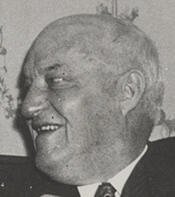
John Fitzgibbons (July 10, 1868, in Glenmore, Oneida County, New York – August 4, 1941, in Buffalo, Erie County, New York) was an American politician from New York and a member of the Democratic Party who served one term in the United States House of Representatives from 1933 to 1935. Born in the rural community of Glenmore, he spent his early childhood in Oneida County before his family relocated in 1870 to Oswego, New York, a growing port city on Lake Ontario that would remain the center of his personal, professional, and political life.
Fitzgibbons was educated in the public schools of Oswego, reflecting the common-school tradition of the late nineteenth century. Entering the workforce at a young age, he became employed as a railway trainman in 1885. His early experience in the railroad industry placed him in close contact with the labor movement at a time when industrialization and rail expansion were reshaping the American economy. This background laid the foundation for his long association with organized labor and his later role as a legislative advocate for railroad workers.
By the mid-1890s, Fitzgibbons had emerged as a significant representative of labor interests in New York State. From 1896 to 1914 he served as the legislative representative of the Brotherhood of Railroad Trainmen of New York State, working to advance the concerns of railway employees before state authorities. In 1914 and 1915 he served as a referee for the New York State Labor Bureau, a position that involved mediating labor disputes and interpreting labor regulations during a period of increasing state involvement in industrial relations. He resumed his work as legislative representative for the Brotherhood of Railroad Trainmen in February 1915, continuing in that capacity until January 1, 1933, thereby maintaining an almost continuous presence in labor advocacy for several decades.
Fitzgibbons also pursued a parallel career in municipal politics in Oswego. He was elected an alderman of the city in 1908 and 1909, participating in local governance and gaining experience in public administration. Building on this service, he was elected Mayor of Oswego, serving from 1910 to 1911 and again from 1918 to 1921. His mayoral terms spanned both the pre–World War I and postwar eras, during which he would have confronted issues of urban services, local infrastructure, and the economic adjustments associated with wartime and peacetime transitions. His growing prominence within the Democratic Party was reflected in his selection as a delegate to the Democratic National Conventions of 1920, 1924, and 1932, where he took part in the national deliberations of his party.
In 1932, amid the economic crisis of the Great Depression and the sweeping political realignment that accompanied the rise of Franklin D. Roosevelt and the New Deal coalition, Fitzgibbons was elected at-large as a Democrat from New York to the 73rd United States Congress. He held office from March 4, 1933, to January 3, 1935, serving one term as a Representative from New York. During this significant period in American history, he participated in the legislative process as the federal government undertook major efforts to address economic collapse, unemployment, and financial instability. As a member of the House of Representatives, he represented the interests of his New York constituents and contributed to the broader democratic process at a time of far-reaching policy change.
After leaving Congress at the conclusion of his term in 1935, Fitzgibbons returned to his longstanding work in labor representation. He resumed his post as the legislative representative for the Railroad Brotherhoods in Albany, continuing to advocate for the rights and welfare of railroad workers. He remained active in this capacity until his death, maintaining his dual legacy as both a public official and a labor advocate.
John Fitzgibbons died on August 4, 1941, in a hospital in Buffalo, Erie County, New York. He was interred at St. Peter’s Cemetery in Oswego, New York, the city that had been the focal point of his life and career. His public service encompassed local government, organized labor, and national legislative office, reflecting the intertwined development of municipal politics, labor advocacy, and Democratic Party leadership in New York during the late nineteenth and early twentieth centuries.
Congressional Record