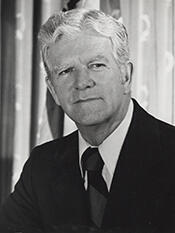
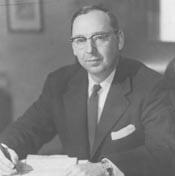
John Wood Fishburne (March 8, 1868 – June 24, 1937) was a Virginia Congressman and cousin to Congressmen Fontaine Maury Maverick and James Luther Slayden of Texas. The three men were related to the noted oceanographer Matthew Fontaine Maury of Virginia, a connection that placed Fishburne within a prominent Southern family with longstanding public and scientific service traditions.
Fishburne was born near Charlottesville in Albemarle County, Virginia, on March 8, 1868. Raised in central Virginia, he received his early education at Pantops Academy, near Charlottesville, an institution known for preparing young men for higher education and professional careers. He later attended Washington and Lee University in Lexington, Virginia, continuing the classical and legal studies that would shape his professional life.
Before entering the legal profession, Fishburne briefly pursued a career in education. In 1886 and 1887 he taught at the Fishburne Military Academy in Waynesboro, Virginia, an academy founded by members of his extended family and recognized for its military and academic training. He then enrolled in the law department of the University of Virginia at Charlottesville, from which he graduated in 1890. That same year he was admitted to the bar and commenced the practice of law in Charlottesville. Alongside his legal work, he was also engaged in agricultural pursuits, reflecting the agrarian economic base of Albemarle County and much of Virginia during this period.
Fishburne’s public career began in state government. A member of the Democratic Party, he was elected to the Virginia House of Delegates and served from 1895 to 1897, representing his locality in the state legislature during a time of political realignment and the entrenchment of Democratic control in Virginia. He later served as a member of the Virginia State Library Board from 1904 to 1913, participating in the oversight and development of the state’s library system and historical collections. In 1913 he was appointed judge of the eighth judicial circuit of Virginia and was subsequently elected to that post by the state legislature. He served as a circuit judge from 1913 until his resignation in 1930, presiding over a wide range of civil and criminal matters during nearly two decades on the bench.
After leaving the judiciary, Fishburne sought national office. In 1930 he was elected as a Democrat to the Seventy-second United States Congress, winning the general election with 58.37 percent of the vote and defeating Republican candidate Jacob A. Garber. His term in the U.S. House of Representatives ran from March 4, 1931, to March 3, 1933. As a member of Congress representing Virginia, Fishburne contributed to the legislative process during a significant period in American history marked by the onset of the Great Depression. During his single term, he participated in the democratic process and represented the interests of his constituents in national debates. He did not seek renomination in 1932 and thus concluded his congressional service after one term.
Following his departure from Congress, Fishburne resumed the practice of law in Charlottesville, returning to the profession that had anchored much of his adult life. He continued to live in the Charlottesville area, maintaining his ties to the community in which he had been born, educated, and long active in public affairs. John Wood Fishburne died at Ivy Depot, near Charlottesville, Virginia, on June 24, 1937. He was interred in Riverview Cemetery in Charlottesville, closing a career that spanned legal practice, state legislative service, judicial office, and a term in the United States House of Representatives.
Congressional Record