United States Representative Directory

John William Ferdon

John William Ferdon served as a representative for New York (1879-1881).

  • Republican
  • New York
  • District 14
  • Former
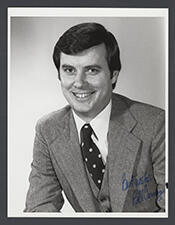
Portrait of John William Ferdon New York
Role Representative

Current assignment referenced in the congressional directory.

State New York

Representing constituents across the New York delegation.

District District 14

District insights and legislative focus areas.

Service period 1879-1881

Years of public service formally recorded.

Font size

Biography

John William Fenton (12 March 1828 – 28 April 1890) was an Irish musician of Scottish and English descent who became a pioneering bandmaster in Japan at the start of the Meiji period. Born in Kinsale, County Cork, Ireland, in 1828, he is considered Irish by birth, yet he may also be regarded as Scottish because his father, John Fenton (1790–1833), was born in Brechin, Scotland. Later in life he resided in Montrose, Angus, around 1881, further reinforcing his Scottish connections. Through his work as a military band leader, he came to be regarded as “the first bandmaster in Japan” and “the father of band music in Japan,” and he played a central role in the early development of Western-style military and ceremonial music in that country.

Little is recorded about Fenton’s early musical training, but his subsequent career indicates that he received a solid grounding in the British military band tradition, which was then one of the principal avenues for professional musicianship in the British Isles. By the mid-nineteenth century he had entered the British Army and risen to become bandmaster of the 10th Regiment of Foot, 1st Battalion. In this capacity he would have been responsible for organizing, training, and directing the regiment’s brass and wind ensemble, a role that required both musical skill and administrative competence. His background in the British regimental system, with its formalized use of music for parades, ceremonies, and public occasions, shaped the methods he later introduced to Japan.

Fenton arrived in Japan in 1868 as bandmaster of Britain’s 10th Regiment of Foot, 1st Battalion, which had been dispatched to Yokohama to protect the small foreign community during the turbulent transitional period at the end of the Tokugawa shogunate and the early years of the Meiji Restoration. Stationed in the treaty port, his brass band regularly rehearsed and performed, and these activities attracted the attention of Japanese observers who were then beginning to study Western military practices. A group of Japanese naval cadets overheard the band rehearsing and, impressed by the sound and organization of the ensemble, persuaded Fenton to become their instructor. This first group of cadet musicians is traditionally regarded by the central band of the Japanese Maritime Self-Defense Force as the earliest predecessor of Japan’s naval bands. To support this new program of instruction, Fenton ordered instruments from London for his Japanese students, thereby laying the material as well as the educational foundation for Western-style band music in the country.

In 1869, while working with Japanese military and court circles, Fenton realized that Japan lacked a national anthem at a time when its leaders were intent on presenting the country as a modern nation-state in line with Western powers. Recognizing the symbolic importance of such a composition, he collaborated with Artillery Captain Ōyama Iwao, an officer from the samurai class of the Satsuma domain who was well versed in Japanese and Chinese literature. Fenton explained the role and character of a national anthem, often referring to the British national anthem and emphasizing the close relationship between its words and music as a model for what Japan would need. Ōyama agreed to select an appropriate text and chose a tenth-century poem that prays for the longevity of the lord, generally understood to refer to the Emperor. These words became the lyrics of what would be known as “Kimi ga Yo.”

Ōyama is said to have asked Fenton to compose a melody for the chosen poem. Fenton had only three weeks to write the music and just a few days to rehearse it with his musicians before it was performed before the Emperor in 1870. Some contemporaries and later commentators noted similarities between Fenton’s melody and a Satsuma lute tune, and there were criticisms that the piece drew too closely on existing musical material. Nonetheless, his setting was the first version of “Kimi ga Yo” to be officially performed, and it marked the beginning of the anthem’s formal association with the Japanese state. Although this initial version was later replaced, Fenton’s music has not disappeared from Japanese ceremonial life: his arrangement is still performed annually at the Myōkōji Shrine in Yokohama, near the area where he was based as a military band leader.

When Fenton’s battalion left Japan in 1871, he chose to remain in the country, continuing his work for an additional six years. During this period he served as a bandmaster with the newly formed Japanese navy and later with the band of the imperial court. His position reflected the Meiji government’s broader policy of employing foreign experts (oyatoi gaikokujin) to accelerate modernization in specialized fields. The cost of his salary was shared between the navy and the Imperial Palace Music Department (the Gagaku bureau), indicating the importance attached to his services in both military and courtly contexts. Under his guidance, Western-style instrumentation, repertoire, and training methods became more firmly established in official Japanese musical institutions.

The evolution of “Kimi ga Yo” continued after Fenton’s departure from direct service. In 1880, the Imperial Household Agency adopted a modified melody attributed to Hiromori Hayashi, based on traditional Japanese court music modes but composed in a mixed style influenced by Western hymns. In 1879–1880, a German musician serving as a foreign advisor, Franz Eckert, adapted this melody using Western-style harmonies and orchestration. The resulting version, which incorporated elements from both Fenton’s and Hayashi’s work, became the second and ultimately the current form of “Kimi ga Yo.” The modern anthem’s harmonization and orchestration thus represent the combined contributions of several influential bandmasters, with Fenton’s pioneering efforts forming the starting point of the process that led to its acceptance as Japan’s national anthem.

Fenton’s personal life was marked by both loss and relocation during his years in Japan and afterward. His first wife, Annie Maria, died in 1871 at the age of forty, and she was buried in the Yokohama Foreigners’ Cemetery, a resting place for many expatriates of the period. He later remarried, taking Jane Pilkington as his wife, and in April 1877 he left Japan, sailing to San Francisco. By 1881, census records show him living in Montrose, Angus, Scotland, with his American-born wife, recorded as Jessie P. Fenton, and their daughters Jessie and Maria, a circumstance that underscores both his Scottish family ties and his transnational life between the British Isles, Japan, and the United States. At some point after this, he returned to California, where he spent his final years.

John William Fenton died on 28 April 1890 in California and was buried in Santa Cruz. Although he did not hold political office or legislative authority, his work had lasting cultural and symbolic consequences for a modernizing Japan. Through his introduction of Western military band practices, his instruction of Japan’s earliest naval musicians, and his central role in initiating the process by which “Kimi ga Yo” became the national anthem, he left an enduring imprint on Japanese state ceremony and musical life that extended far beyond his own lifetime and far from his birthplace in Ireland.

Congressional Record

Loading recent votes…

More Representatives from New York