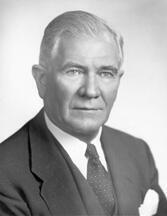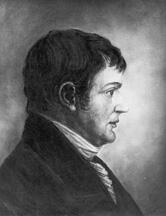
John Wayles Eppes (April 1772 – September 13, 1823) was an American lawyer, planter, and politician who represented Virginia in both houses of the United States Congress during the early national period. A member of the Republican, or Democratic-Republican, Party, he served in the U.S. House of Representatives from 1803 to 1811 and again from 1813 to 1815, and in the U.S. Senate from 1817 to 1819. His national legislative career followed earlier service in the Virginia House of Delegates, where he represented Chesterfield County from 1801 to 1803. Across six terms in Congress, he participated in the legislative process during a significant period in American history, representing the interests of his Virginia constituents and playing a leading role in fiscal and financial matters.
Eppes was born in April 1772 at Eppington, a family plantation in Chesterfield County in the Colony of Virginia. He was the sixth child and only son of Elizabeth (née Wayles) Eppes and Francis Eppes, a member of the First Families of Virginia who would himself serve one term in the Virginia House of Delegates about a decade later. Through both his parents he was closely connected to some of the most prominent families of the era: his mother was the half-sister of Martha Wayles Skelton Jefferson, the wife of Thomas Jefferson, making Eppes a nephew by marriage to the future president. These family ties brought him into close association with Jefferson and the broader Jefferson and Wayles kinship networks that shaped Virginia’s political and social elite in the late eighteenth and early nineteenth centuries.
Educated in the manner customary for sons of the planter class, Eppes first studied under private tutors before pursuing formal higher education. He attended the University of Pennsylvania in Philadelphia and later returned to Virginia, where he graduated from Hampden–Sydney College in 1786. After completing his collegiate studies, he read law and was admitted to the bar in 1794. He commenced the practice of law in Richmond, the capital of Virginia, while also managing his growing interests as a planter. His legal training and family connections positioned him for entry into public life at both the state and national levels.
Eppes’s personal life was closely intertwined with the Jefferson family. On October 13, 1797, he married his first cousin Mary Jefferson, known as “Polly” in childhood and “Maria” as an adult, the younger daughter of Thomas Jefferson. The marriage took place at Monticello, Jefferson’s estate near Charlottesville, Virginia. The couple resided at Mont Blanco, Eppes’s plantation in Chesterfield County. Their union was marked by several miscarriages, but three children were born: an unnamed daughter who lived from December 31, 1799, to January 1800; Francis Wayles Eppes (September 20, 1801 – May 30, 1881); and Maria Jefferson Eppes (February 15, 1804 – February 1806). Mary Jefferson Eppes died at Monticello on April 17, 1804, two months after the birth of their daughter Maria, and she was buried there. On April 15, 1809, Eppes married Martha Burke Jones, daughter of Willie Jones, a prominent North Carolina planter and politician, and they had six children together, further extending his connections among the Southern political and planter elite.
Following the death of his first wife, Eppes moved his household and enslaved laborers from Mont Blanco to another of his plantations, Millbrook, in Buckingham County, Virginia. Among those he took to Millbrook was Betsy Hemmings, the mixed-race daughter of Mary Hemings and granddaughter of Betty Hemings, members of the extended Hemings family long associated with the Jeffersons. According to accounts preserved by her descendants, Hemmings became Eppes’s concubine after he was widowed, and she bore him at least two children. Their son Joseph was likely named for her brother, and their daughter Frances bore a name long traditional among the men of the Eppes family. Hemmings lived at Millbrook for the rest of her life and, upon her death in 1857, was buried next to John Wayles Eppes in the family cemetery there, reflecting the enduring, if unofficial, nature of this relationship within the plantation household.
Eppes’s formal political career began in the Virginia House of Delegates, where he represented Chesterfield County from 1801 to 1803, serving alongside Matthew Cheatham. His service in the state legislature coincided with the ascendancy of the Jeffersonian Republican movement in Virginia and nationally. On March 4, 1803, he entered national politics when he was elected as a Democratic-Republican to the Eighth United States Congress. He was subsequently re-elected to the next three succeeding Congresses, serving continuously in the U.S. House of Representatives from March 4, 1803, to March 3, 1811. During this period he was frequently absent from his plantations as he attended to legislative duties in Washington. In the Eleventh Congress he rose to a position of particular influence as chairman of the powerful Committee on Ways and Means, the principal House committee responsible for taxation, revenue, and fiscal policy. Despite this prominence, he lost his bid for re-election and did not serve in the Twelfth Congress, spending the next two years at his Millbrook plantation.
Eppes returned to national office when he won election to the Thirteenth Congress, serving from March 4, 1813, to March 3, 1815. Once again he chaired the Committee on Ways and Means, underscoring his recognized expertise in financial and budgetary matters during the War of 1812 era. After losing the election to the Fourteenth Congress, he nonetheless remained a figure of sufficient standing within Virginia’s Republican ranks to be chosen for the United States Senate. He took his seat in the Senate on March 4, 1817, and served until December 4, 1819. During his Senate tenure, he chaired the Committee on Finance in the second session of the Fifteenth Congress, continuing his long-standing focus on the fiscal and economic issues that confronted the young republic. His service in Congress, encompassing multiple terms in the House and a term in the Senate, occurred during a formative period in American political development, and he participated actively in the democratic process on behalf of his Virginia constituents.
Ill health increasingly affected Eppes in his later years and ultimately curtailed his public career. Citing declining health, he resigned his Senate seat on December 4, 1819, and retired to Millbrook. There he spent his remaining years overseeing his plantation affairs and family matters while suffering from various ailments. John Wayles Eppes died at Millbrook in Buckingham County, Virginia, on September 13, 1823. He was buried in the Eppes family cemetery on the plantation, where, in time, members of his family and Betsy Hemmings would also be interred, marking the final resting place of a figure deeply embedded in the political, familial, and social networks of early republican Virginia.
Congressional Record