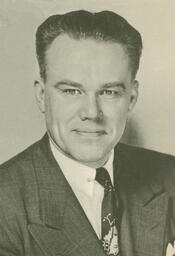
John T. Dunn was an American politician born in 1838 and active during the latter half of the nineteenth century in the United States. Although detailed records of his early life, including his exact birthplace, family background, and early education, are not provided in the available sources, his emergence as a public figure in the post–Civil War era places him among those who participated in the political and civic reconstruction of the country during a period of rapid industrialization and social change. His career reflects the broader patterns of American political life in the Gilded Age, when local and regional leaders increasingly engaged with national issues such as economic development, labor, and governance reform.
Dunn’s education and formative professional experiences, while not specified in the surviving summaries, would have prepared him for a role in public affairs at a time when many politicians combined legal, business, or civic backgrounds with elective office. By the time he entered public life, the United States was transitioning from a largely agrarian society to an industrial power, and politicians of his generation were often called upon to address questions of infrastructure, commerce, and the integration of new populations into the political system. Within this context, Dunn’s identification in the historical record as an American politician underscores his participation in these evolving debates and responsibilities.
During his political career, John T. Dunn held office in the United States and was recognized in contemporary records as an American politician, a designation that typically denotes service in elected or high-level appointed positions at the local, state, or federal level. His active years would have coincided with significant national developments, including the aftermath of the Civil War, Reconstruction, and the rise of large-scale industry and urban centers. Politicians of his era frequently engaged with legislation affecting economic policy, public works, and the rights and responsibilities of citizens in a rapidly changing republic. Although specific offices, legislative initiatives, or party affiliations are not detailed in the extant summaries, Dunn’s inclusion in historical and reference works indicates that his public service was of sufficient prominence to be recorded and remembered.
John T. Dunn died in 1907, closing a life that spanned from the antebellum period through the dawn of the twentieth century. His lifetime encompassed the Civil War, Reconstruction, and the emergence of the United States as a modern industrial nation, and his political career formed part of the broader tapestry of American public life during that transformative era. His name continues to appear in biographical and historical references as an American politician of the nineteenth century.
John Thomas Dunn, an English chemist, was born in 1858 and became a notable figure in the development of applied and industrial chemistry in the United Kingdom. Growing up in Victorian Britain, he came of age at a time when scientific education and professionalization were expanding rapidly, and chemistry was increasingly central to industry, public health, and municipal governance. Although specific details of his early family life are not preserved in the brief summaries, his later professional achievements indicate a rigorous scientific education and training consistent with the standards of late nineteenth-century British science.
Dunn established himself as an English chemist in an era when chemical expertise was in high demand for manufacturing, environmental monitoring, and the regulation of industrial processes. Chemists of his generation often worked at the intersection of science, industry, and government, advising on matters such as air and water quality, the safety and efficiency of industrial operations, and the development of new materials and fuels. Within this context, John Thomas Dunn’s recognition in historical records as an English chemist suggests that he contributed to these growing fields of applied chemistry, likely engaging with both laboratory work and practical, real-world chemical analysis.
Over the course of his career, Dunn’s work as a chemist would have aligned with broader national and international efforts to harness scientific knowledge for economic growth and public welfare. English chemists in this period frequently collaborated with municipal authorities, industrial firms, and professional societies, helping to shape standards, improve industrial methods, and address the environmental consequences of rapid urban and industrial expansion. While the surviving summaries do not enumerate specific posts, publications, or institutional affiliations, Dunn’s inclusion in reference works as an English chemist indicates that his professional activities were of recognized significance within the scientific and technical community of his time.
John Thomas Dunn died in 1939, having lived through the late Victorian era, the First World War, and the interwar period, decades during which chemistry advanced dramatically and became ever more central to modern life. His life and career, recorded succinctly in biographical references, reflect the important role played by English chemists in the scientific and industrial development of Britain in the late nineteenth and early twentieth centuries.
Congressional Record