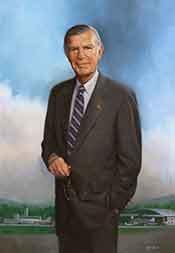
John Dick (politician) (1794–1872) was an American politician and judge who served in public life during the formative decades of the United States in the nineteenth century. Born in 1794, he came of age in the early national period, when the institutions of the federal and state governments were still evolving and the legal framework of the young republic was being tested and refined. Details of his early family background, place of birth, and childhood circumstances are not extensively documented in standard reference works, but his later career indicates that he received sufficient education and legal training to enter the bar and participate in public affairs at a relatively high level.
Dick’s education would have followed the customary path for aspiring lawyers and public officials of his generation, combining formal schooling with legal apprenticeship. In an era before widespread law schools, he likely read law under the supervision of an established attorney, studying English common law, early American constitutional decisions, and state statutes. This preparation equipped him to practice law and to assume judicial responsibilities, and it placed him within the professional and political networks that were essential to advancement in public office during the antebellum period.
By the time he reached full professional maturity, John Dick had established himself as both a practicing lawyer and a public servant. His legal career provided the foundation for his later judicial work, and his involvement in local and regional affairs brought him into contact with the political issues of his day, including questions of federal versus state authority, the expansion of the United States, and the development of commercial and transportation infrastructure. His reputation as a lawyer and his engagement with civic matters contributed to his emergence as a figure suitable for elective or appointive office.
As an American politician, Dick participated in the political life of his state and, by extension, of the nation. While the specific offices he held at various times are not fully detailed in the surviving summary records, he is identified in historical references as a politician, indicating that he either sought or held elective office, took part in legislative or administrative decision-making, and aligned himself with one of the major political tendencies of the era, such as the Jacksonian Democrats, the Whigs, or their successors. His political activity would have involved engagement with the contentious debates of the mid-nineteenth century, including economic policy, states’ rights, and, increasingly, the sectional tensions that preceded the Civil War.
In addition to his political work, John Dick served as a judge, a role that required him to interpret and apply the law in civil and criminal matters. His judicial service placed him at the intersection of law and politics, as judges of his generation were often selected through partisan processes yet expected to administer justice impartially. As a judge, he would have presided over trials, ruled on questions of evidence and procedure, and issued decisions that contributed to the body of state jurisprudence. His dual identification as both politician and judge reflects the fluid boundaries between the legal and political professions in nineteenth-century America.
Dick’s public career extended across a period marked by rapid territorial expansion, the rise of new political parties, and intensifying national conflict. Living until 1872, he witnessed the War of 1812 in his youth, the era of Jacksonian democracy, the Mexican–American War, the secession crisis, the Civil War, and the beginning of Reconstruction. His long life thus spanned a transformative epoch in American history, and his work as a politician and judge unfolded against this backdrop of constitutional change and social upheaval.
John Dick died in 1872, closing a career that combined legal practice, political engagement, and judicial service. Although many details of his personal life and specific offices are sparsely recorded in brief modern summaries, he is remembered in historical reference works as an American politician and judge whose professional life reflected the intertwined legal and political institutions of the United States in the nineteenth century.
Congressional Record